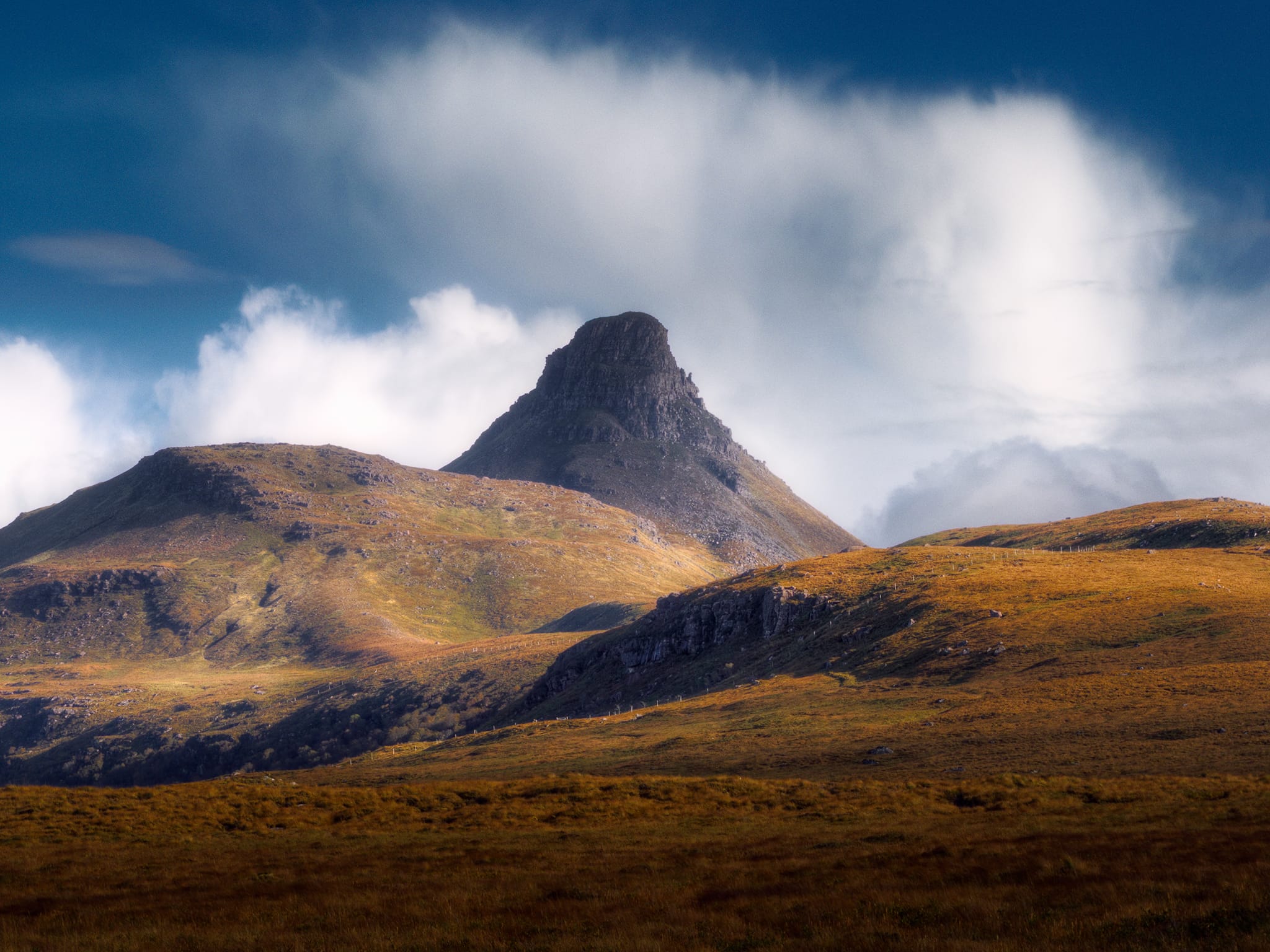
A key focal for me during this trip was Suilven.
I’ve been obsessed with this mountain ever since I first laid eyes on it over a decade ago.
On this particular day, we were up bright and early on the premise of heading all the way to Inverkirkaig for hiking to the Falls of Kirkaig. 2–3 hours and lots of mud later, we abandoned the hike without seeing the falls; with all the rain, the “path” had degenerated into a boggy quagmire.
Dispirited but a full day still ahead, we got lunch and instead took in some “roadography”. Thankfully Scotland, unlike England, is extremely generous with its parking, offering plenty of small laybys to stop at for free and scramble around for some photos.
My first sighting of Suilven was across Loch Inver, it’s pillar form rising ominously above the village of Lochinver. From there we followed the A837 all the way around Loch Assynt, capturing compositions along the way, then breaking off north on the A894 for shots of the massive Quinag, a ridiculously still Loch Glencoul, and finally the picture Kylesku bridge.
A bad start turned out to be a lovely day.
Quinag, Suilven & Loch Assynt, Assynt & Coigach, Scotland, Autumn © 2026 by Ian Cylkowski is licensed under CC BY-NC-SA 4.0.
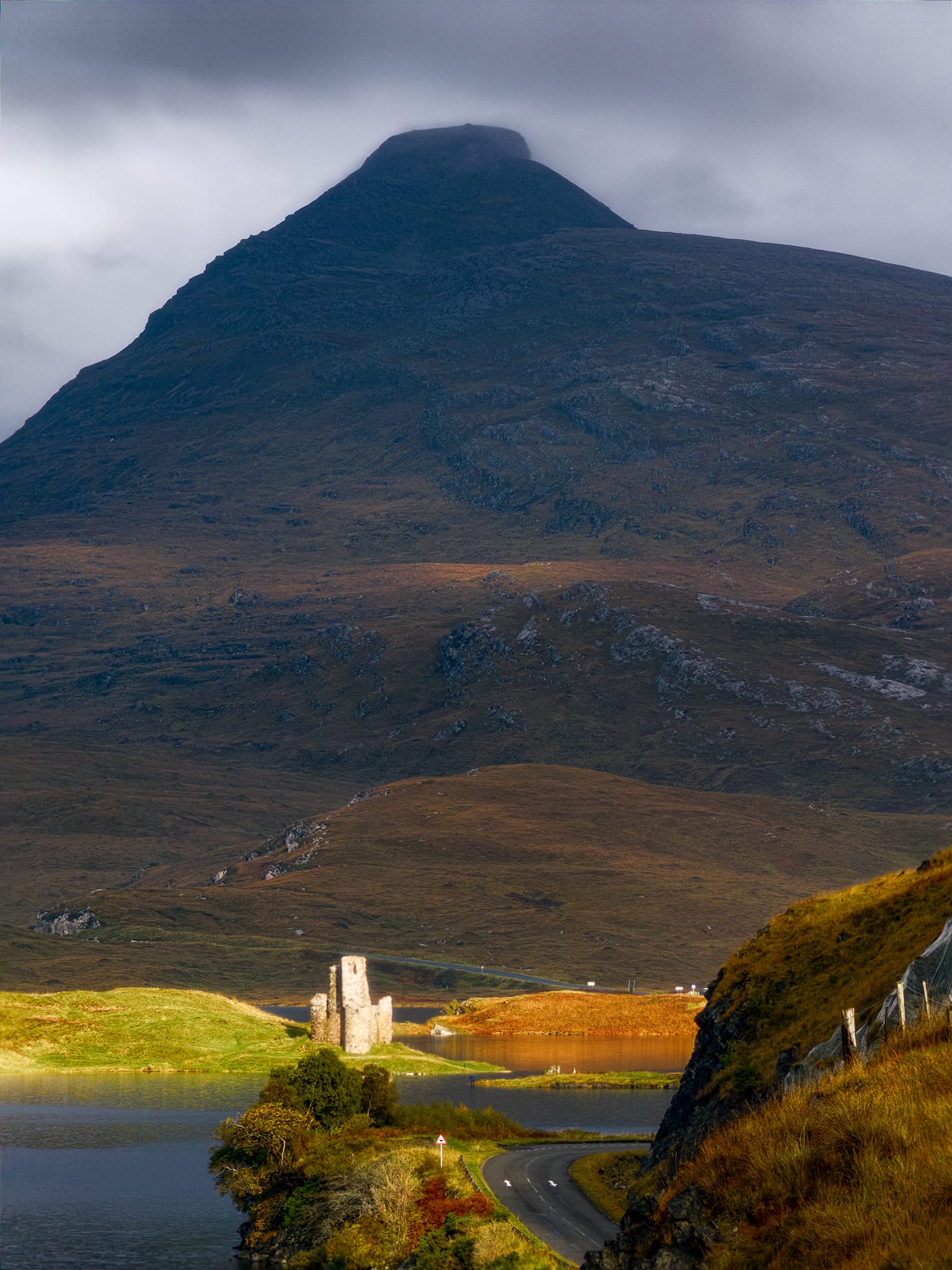
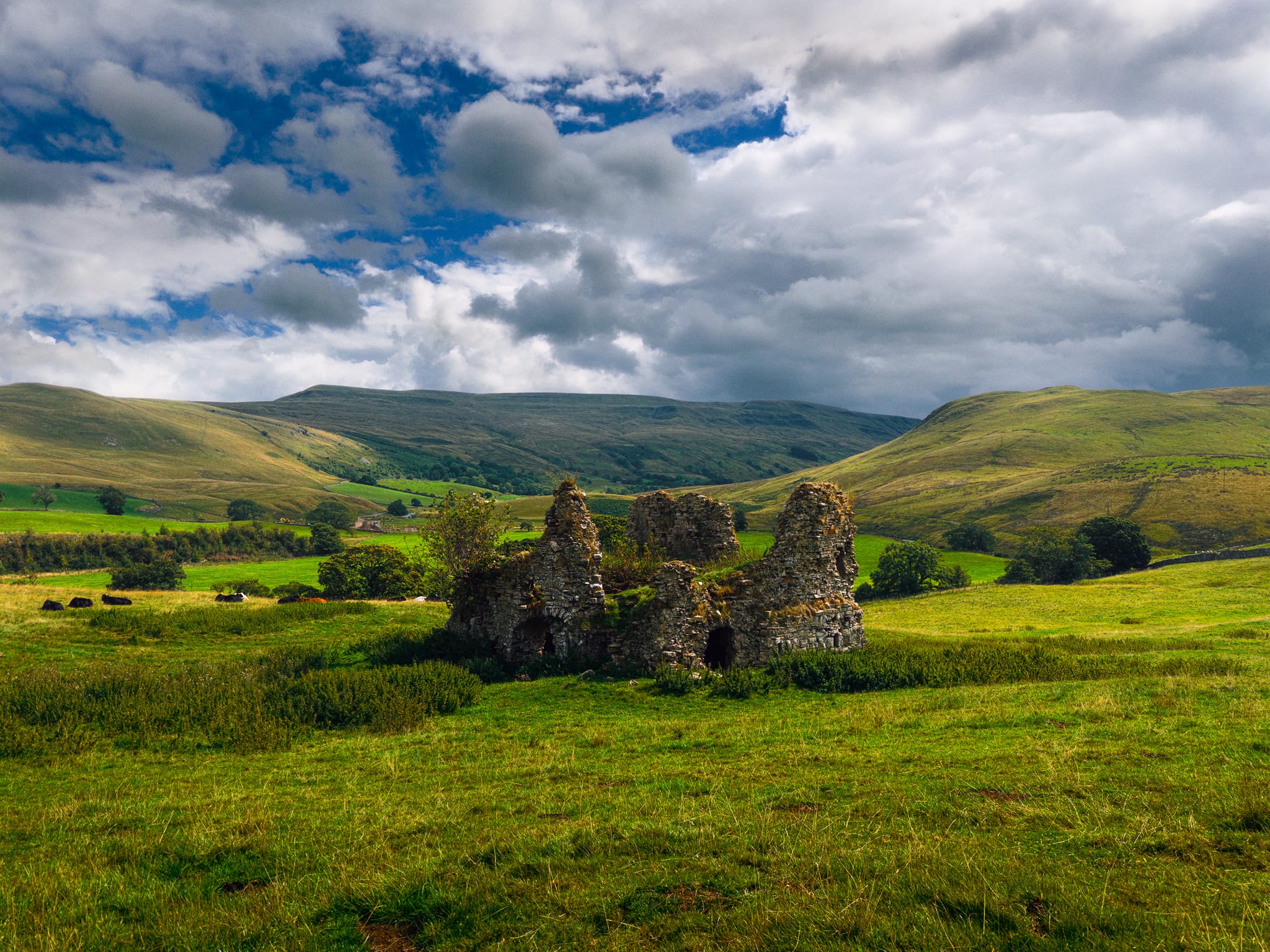
Early in the day, heading to Inverkirkaig, we were blessed with beautiful light conditions. As we crested the road north of Inchnadamph, this frankly ridiculous view of dark Quinag towering over the spotlighted ruins of Ardvreck Castle stopped us in our tracks. We found a handy free parking layby off the road, and began shooting compositions like crazy.
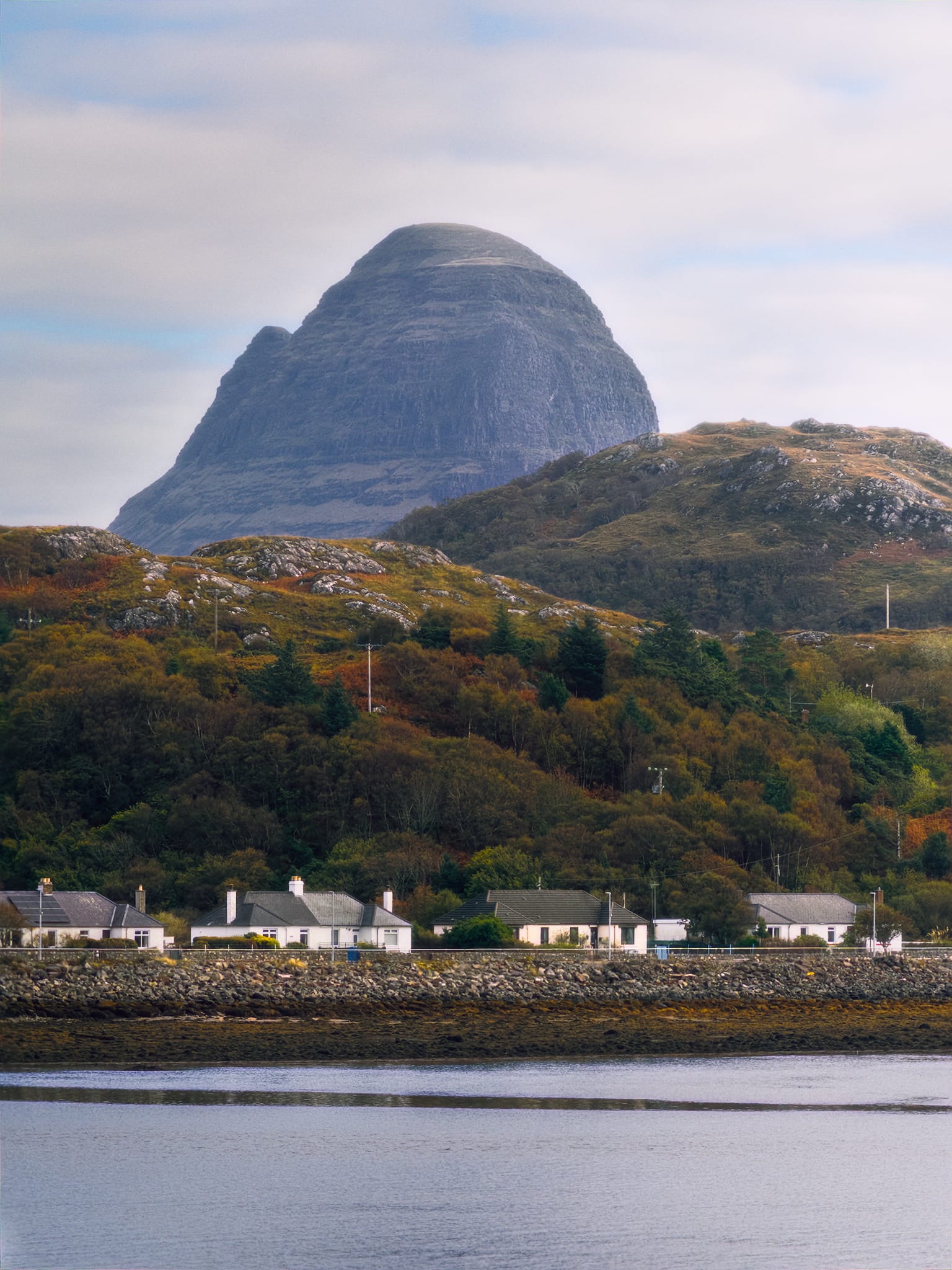
After returning back to the car from trying to hike towards the Falls of Kirkaig, we explored Lochinver looking for shots across the loch. And near Highland Stoneware we got it. From this angle, Suilven presents as a formidable dome or pillar of a mountain, rising vertiginously above the village. It’s name, after all, comes from the Old Norse súla fjell, meaning “pillar mountain” (with the Gaelic bheinn eventually substituting the Old Norse fjell). Depending on your point of view, it presents as either protective or oppressive. To me she’s just astonishingly beautiful.
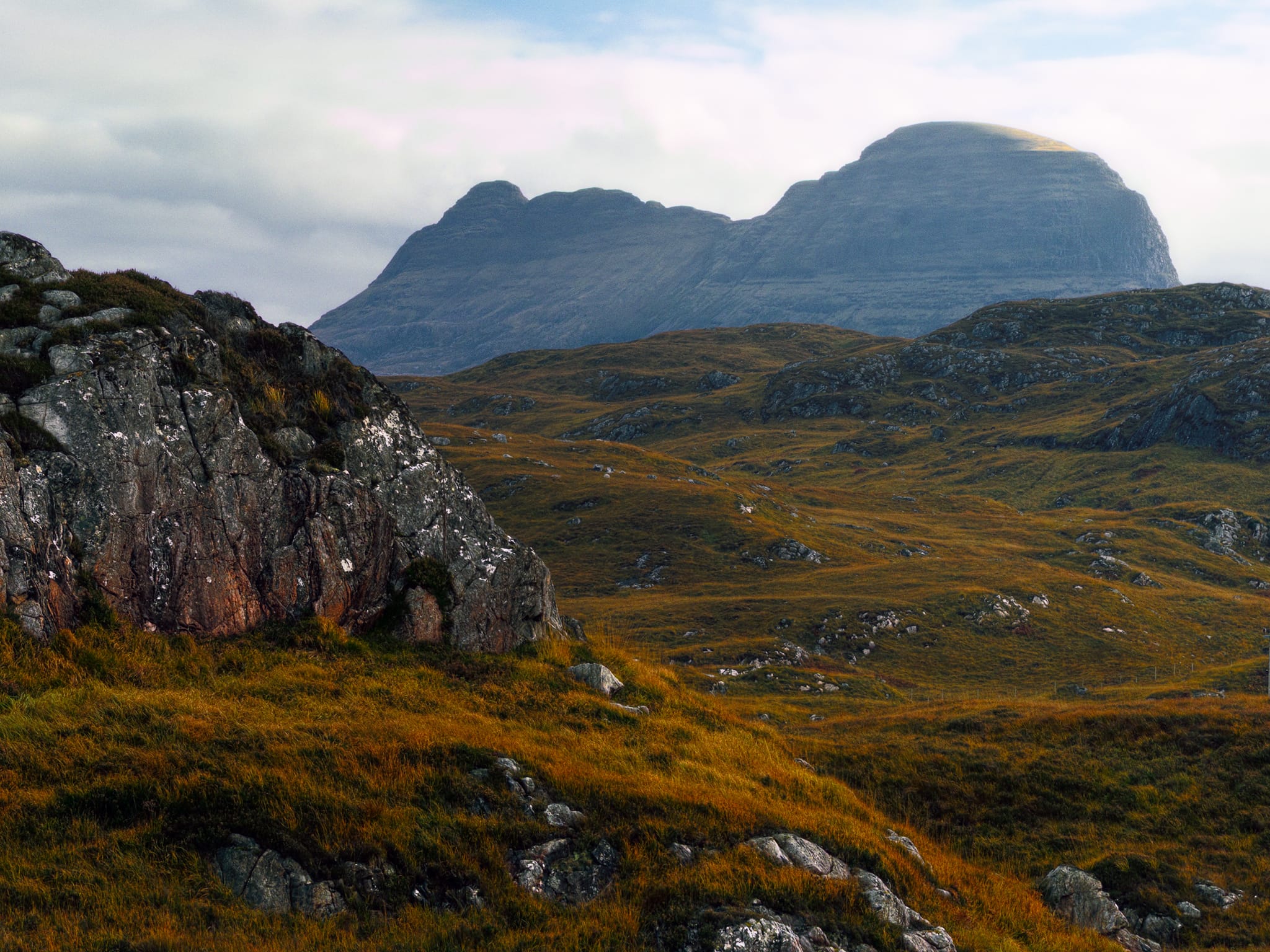
North of Lochinver along the A837, Suilven’s north-facing profile is more apparent. We stopped at another layby to scramble around the area’s little crags, shooting compositions of Suilven’s north face.
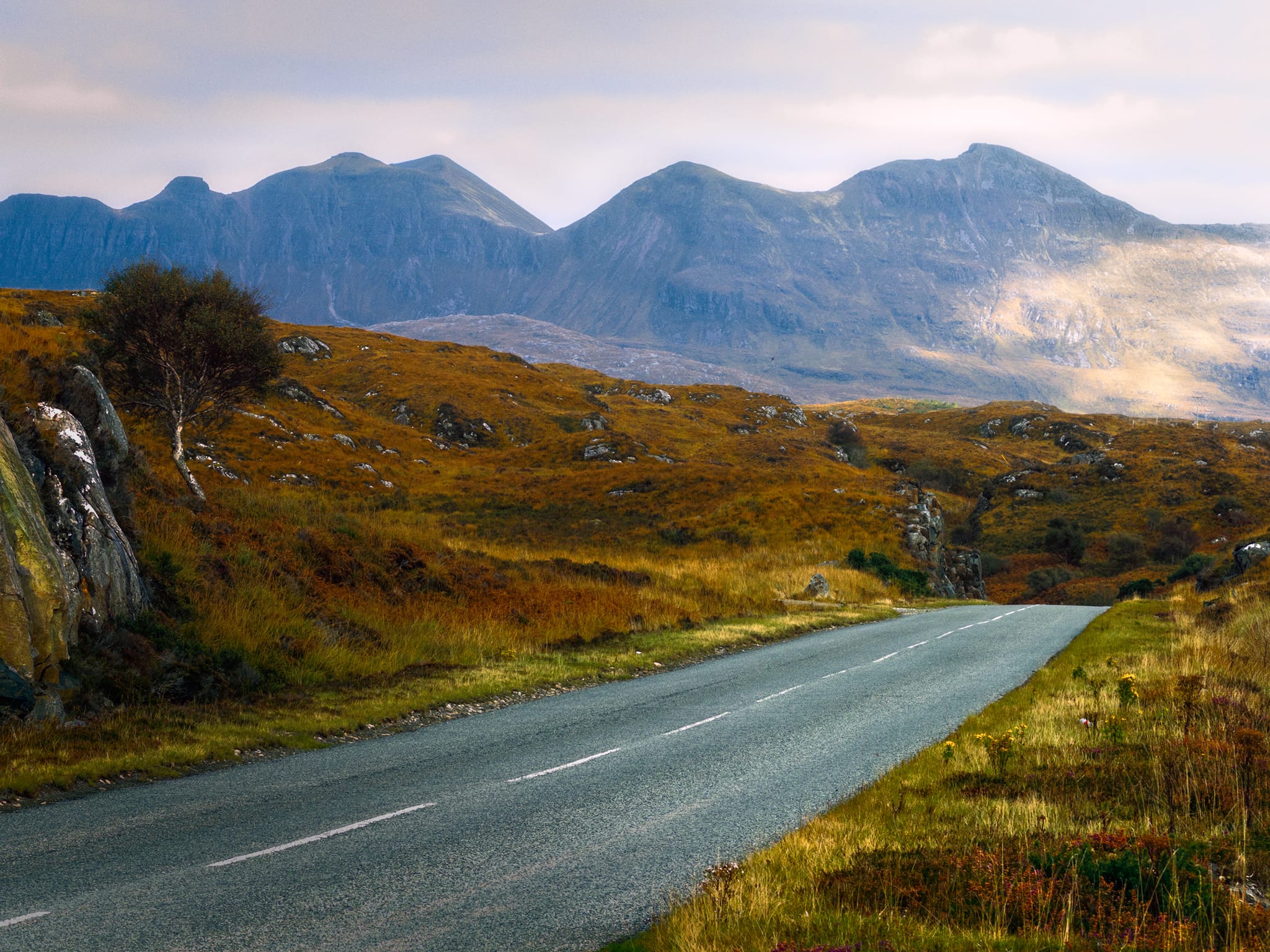
From the same point another of the area’s famous mountains demanded our attention: the southwestern wall of Quinag. Its name comes from the Gaelic Cuinneag, a milk pail, referencing its shape.
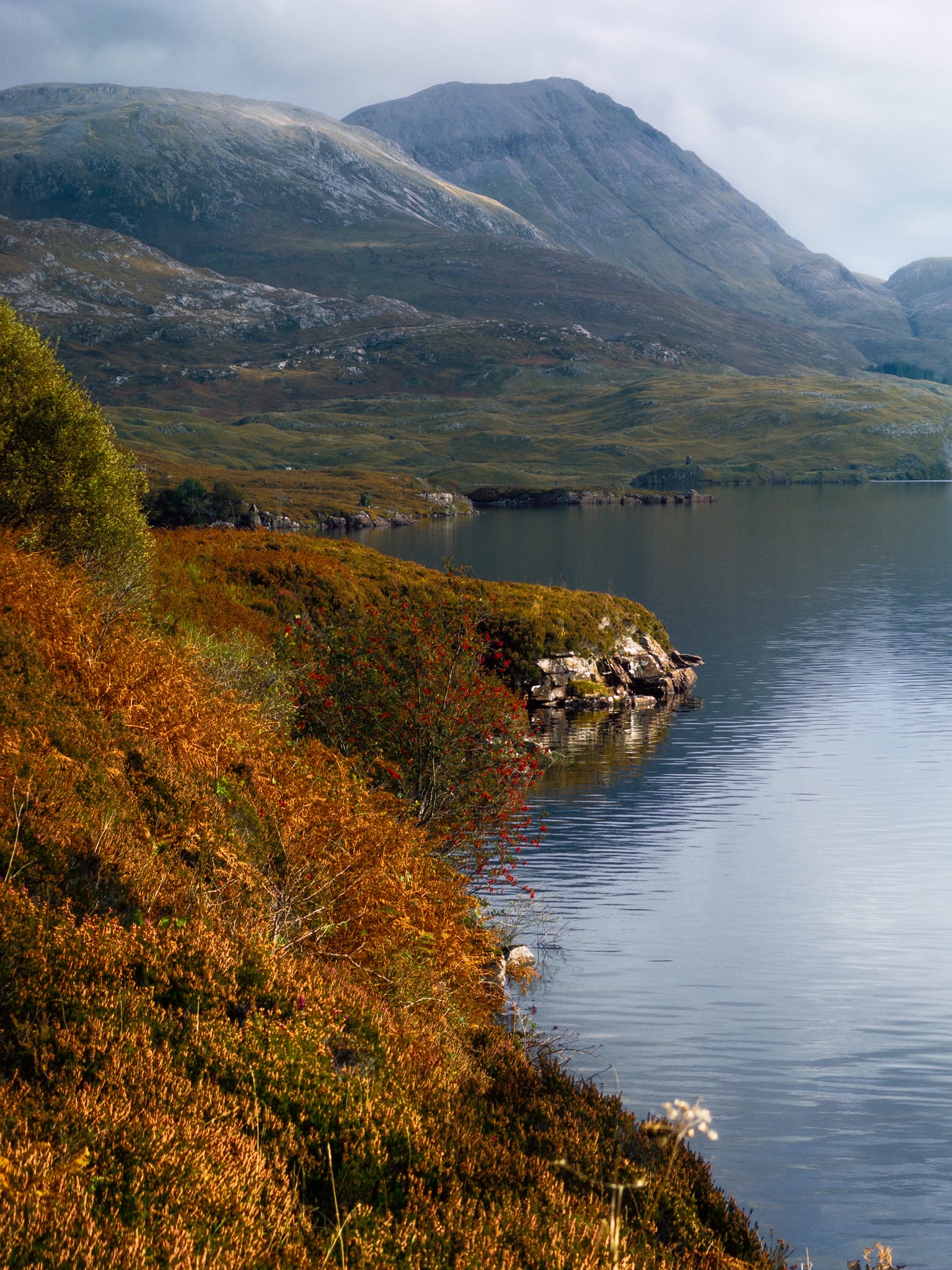
Along the northern shore of Loch Assynt, we stopped off at another free layby to get as close to the loch shore as possible. The sun burst between the clouds to illuminate the beautiful autumn colours flanking the shore. In the distance the pyramidal peak of Conival commands your attention, and to the left is the limestone-scree slope of Beinn an Fhurain.
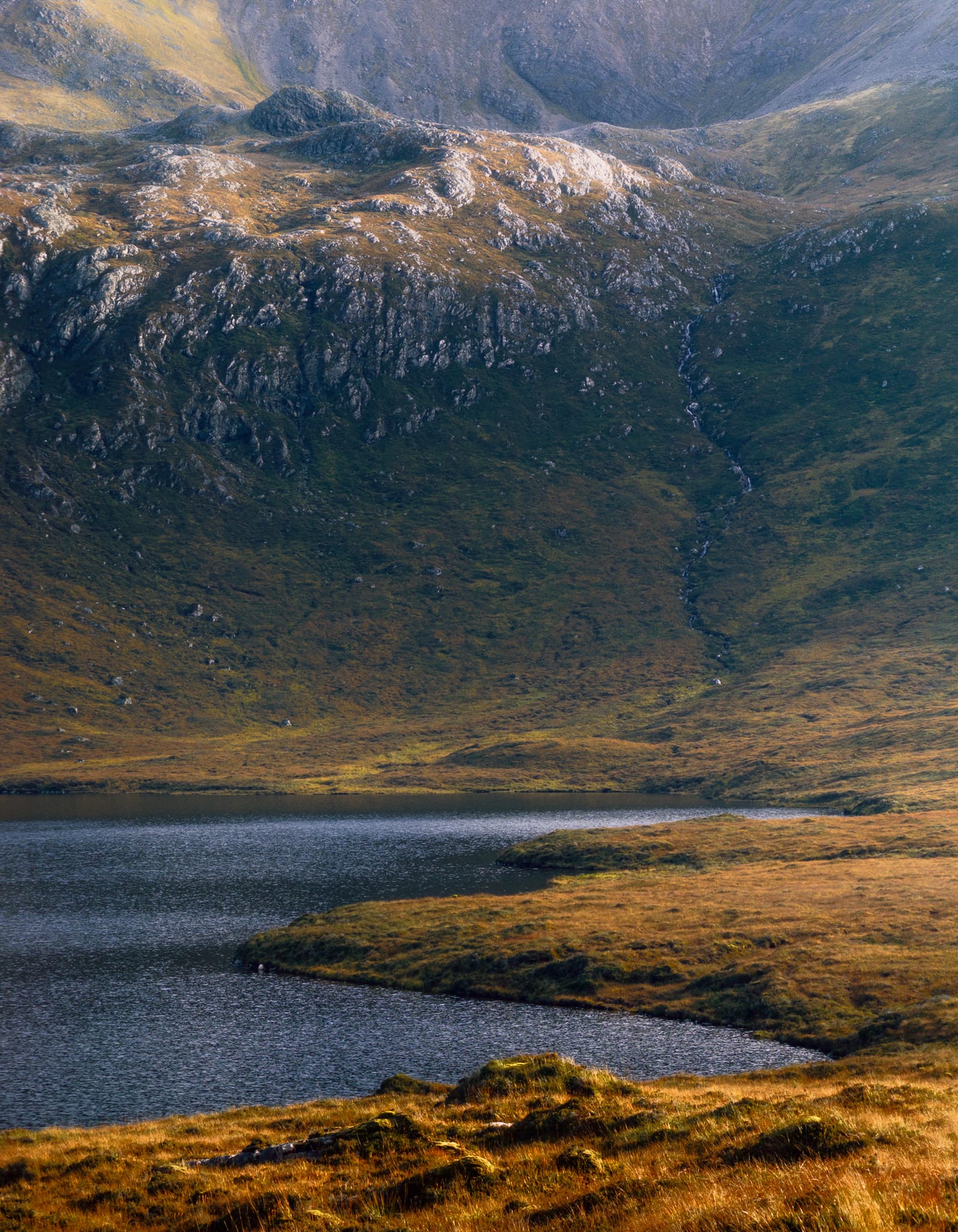
Near the ruins of Ardvreck Castle we branched off north onto the A894. The road makes a sharp descent with a hairpin near the Allt Chranaidh waterfall and, happily, there is more free parking at the hairpin. We stopped here and scrambled up onto the sandstone slabs of Fàire nan Càrn for the views. Looking southeast, I nab this composition across Loch na Gainmhich capturing the crags of the corrie below Glas Bheinn.
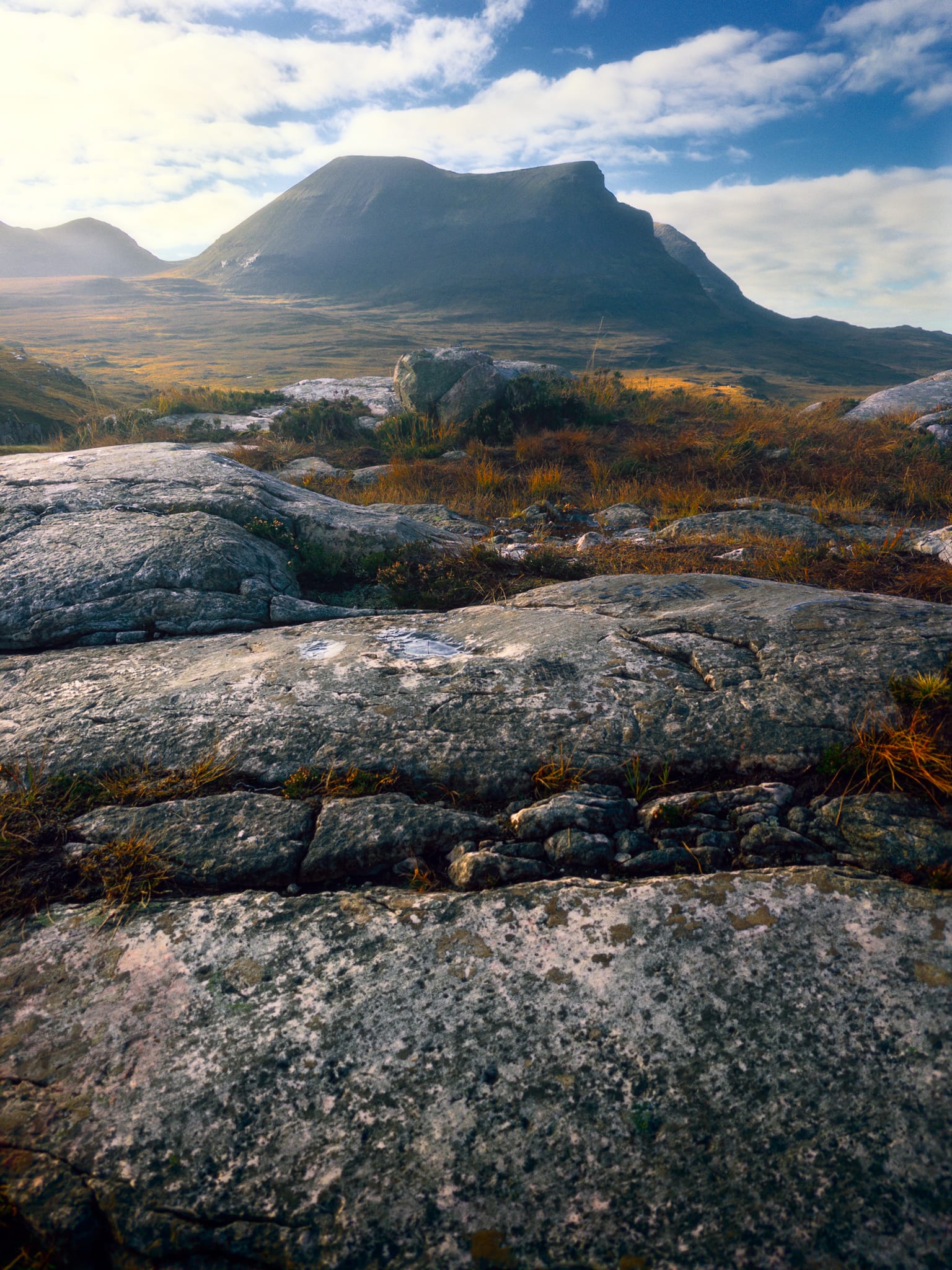
I hopped around the sandstone slabs for more compositions, finding this one looking west towards one of Quinag’s most well-known peaks, Sàil Gharbh.
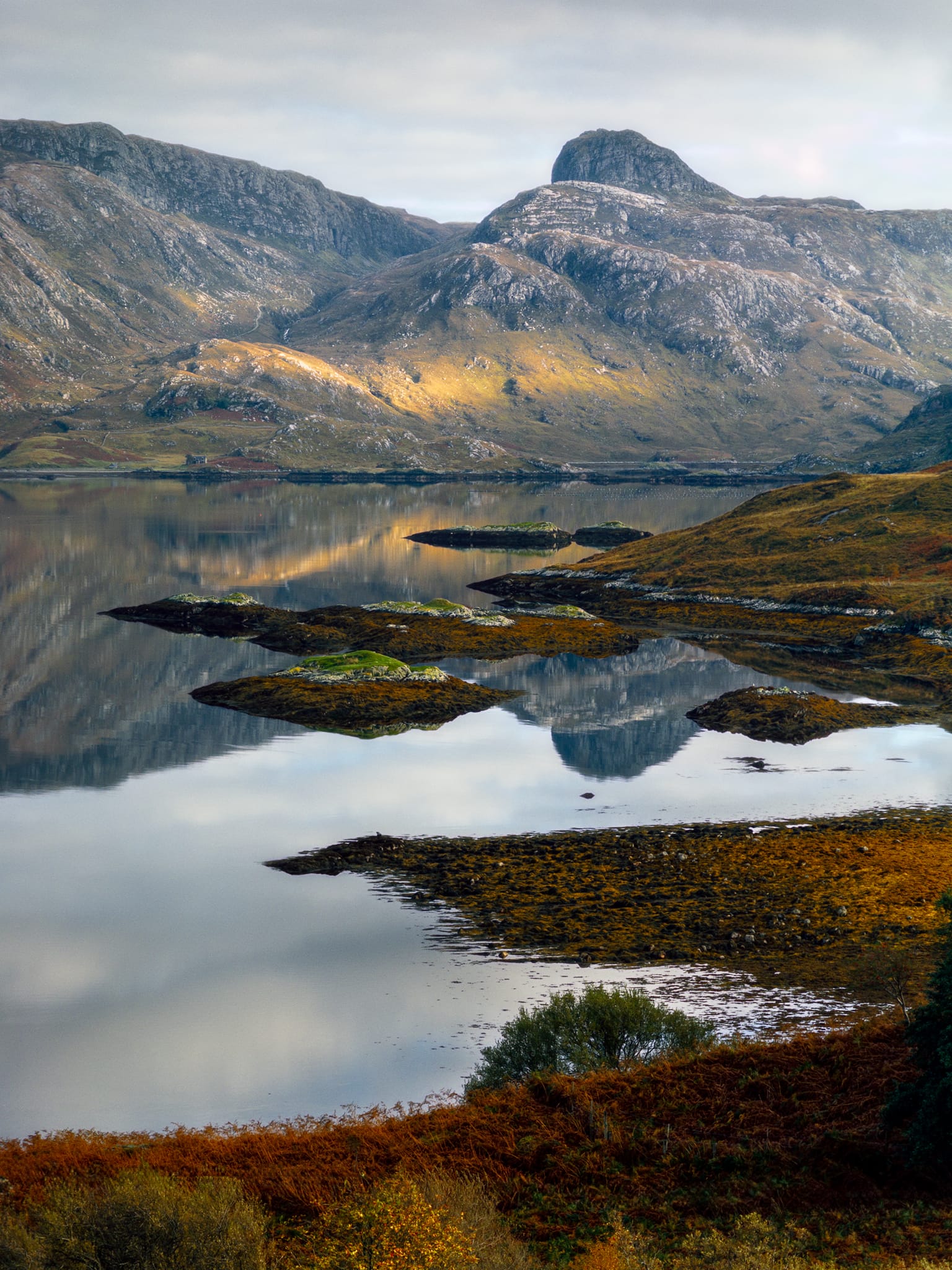
Further north along the A894, the sight east across Loch Glencoul stopped us dead. Absolutely perfect reflections. How could we not? The distinctive knuckly peak reflected in the loch is the Stack of Glencoul, its flanks catching a lovely sliver of golden light.
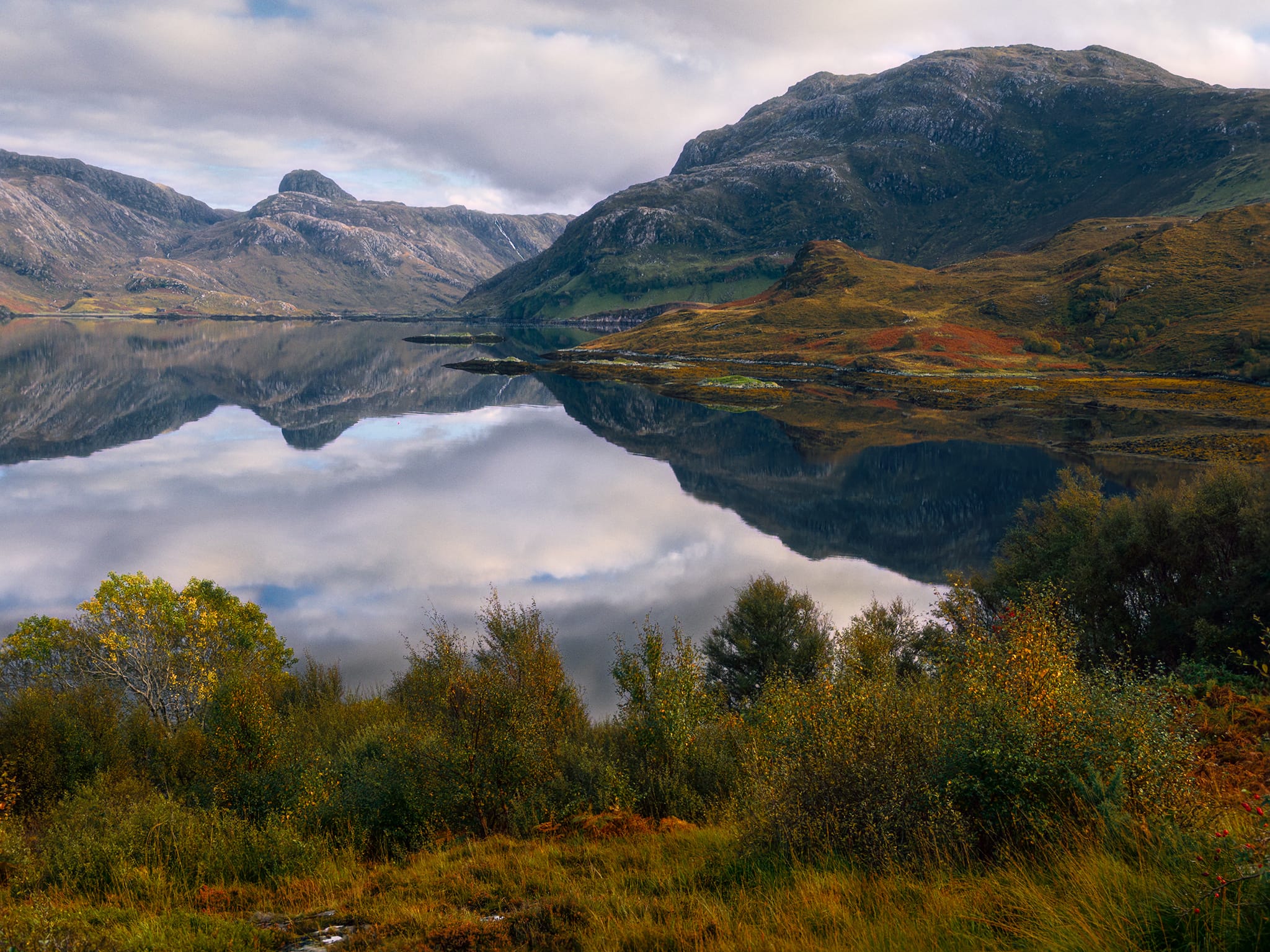
A wider composition from near the same spot, additionally taking in the hulking mass of Cnoc na Creige on the right.
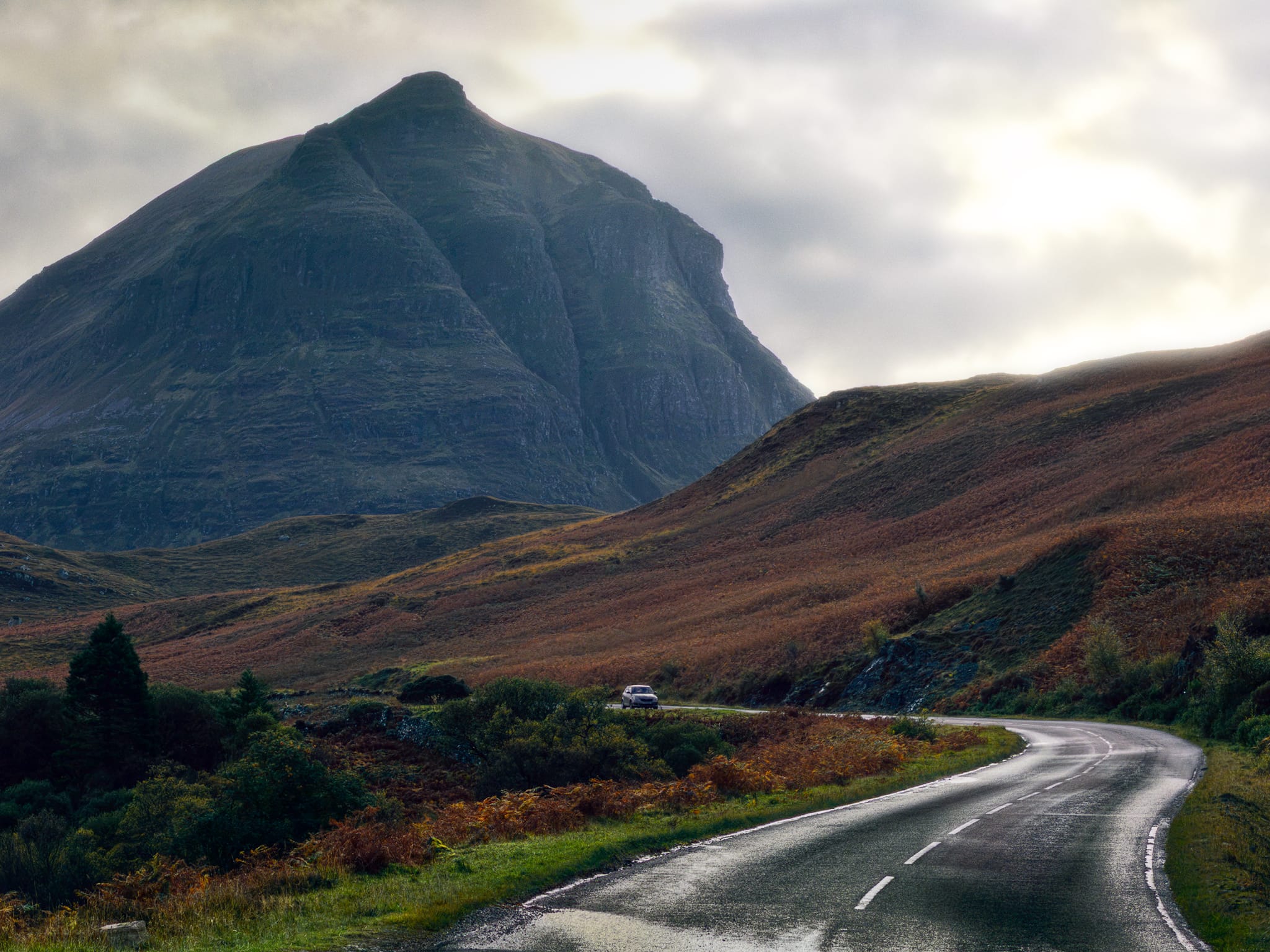
Walking back along the road to the car, Quinag’s Sàil Gharbh peak made itself abundantly clear. An impossible wall of Torridonian sandstone with fluted buttresses, towering above the landscape and our tiny little car.
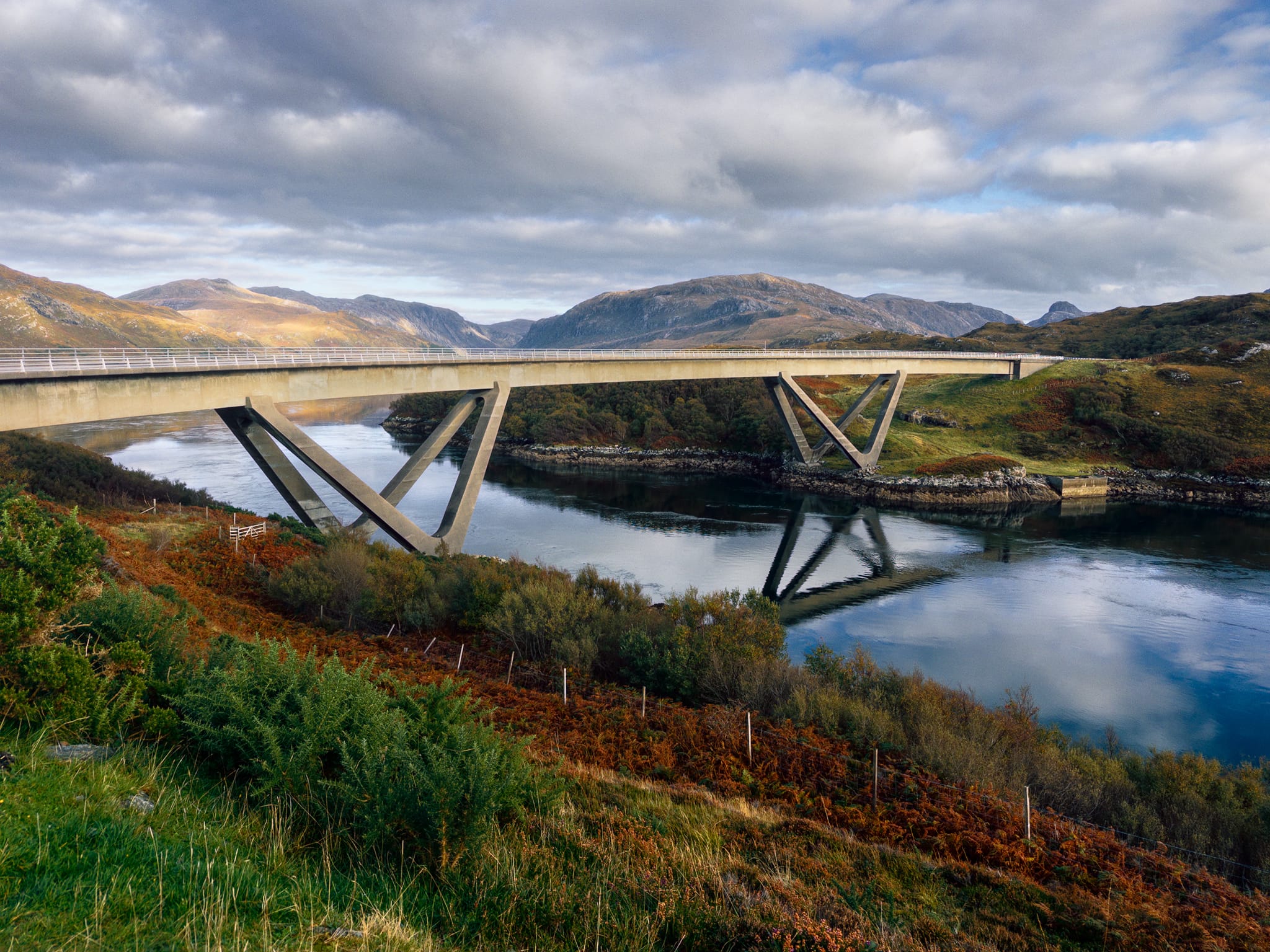
We carried on north, across the Kylesku bridge where another free car park offers respite and cracking views. The bridge was completed in 1984 and is now classified as a Category A structure, recognising it as “visually striking and technically innovative”.
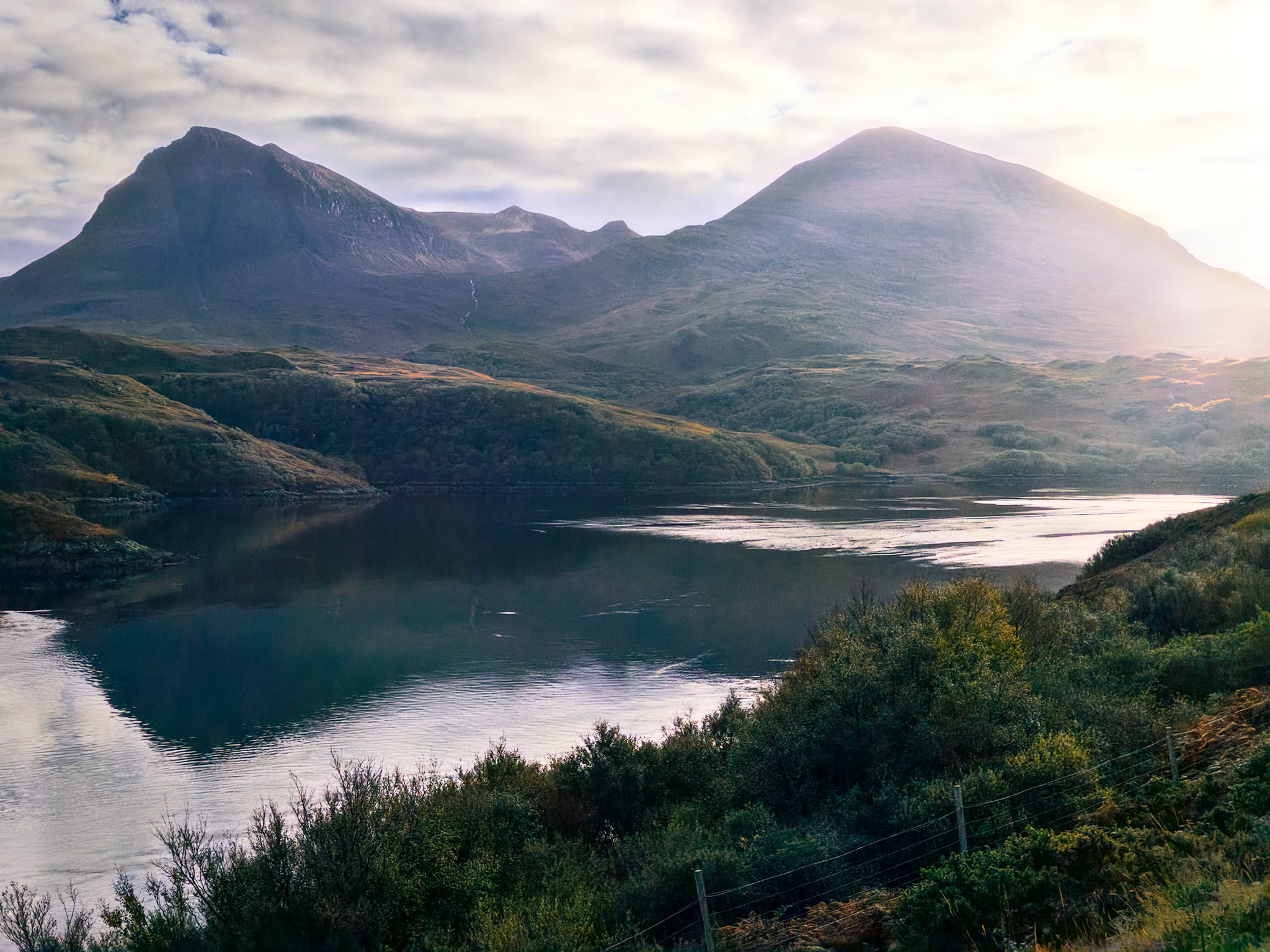
The final shot of the day before embarking back to Ullapool. Two of Quinag’s peaks, Sàil Gharbh and Sàil Ghorm, partially reflected in the loch as the sun began its descent.