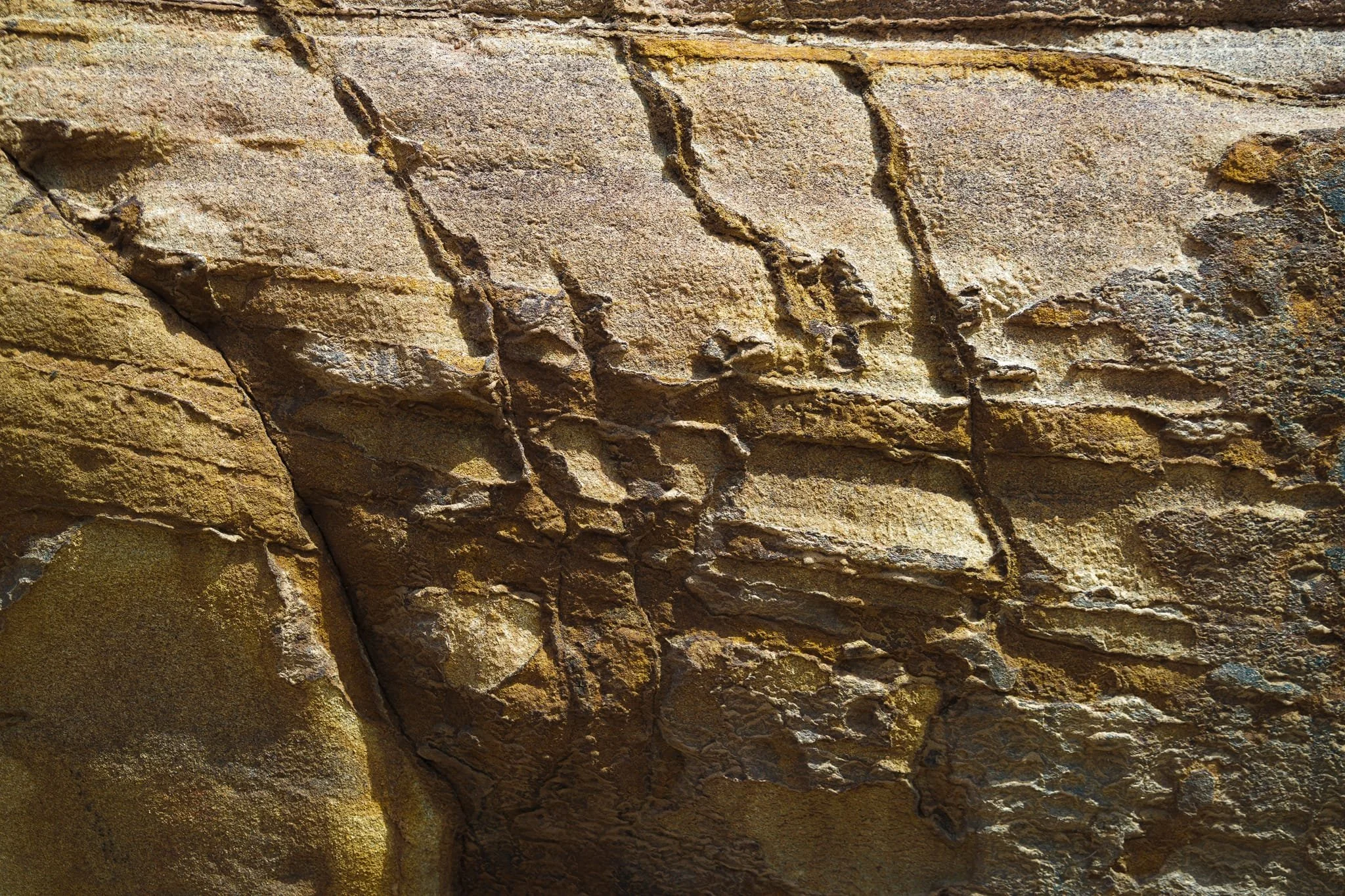
If you’re a bit of a geology nerd you can’t go wrong with Saltwick Bay.
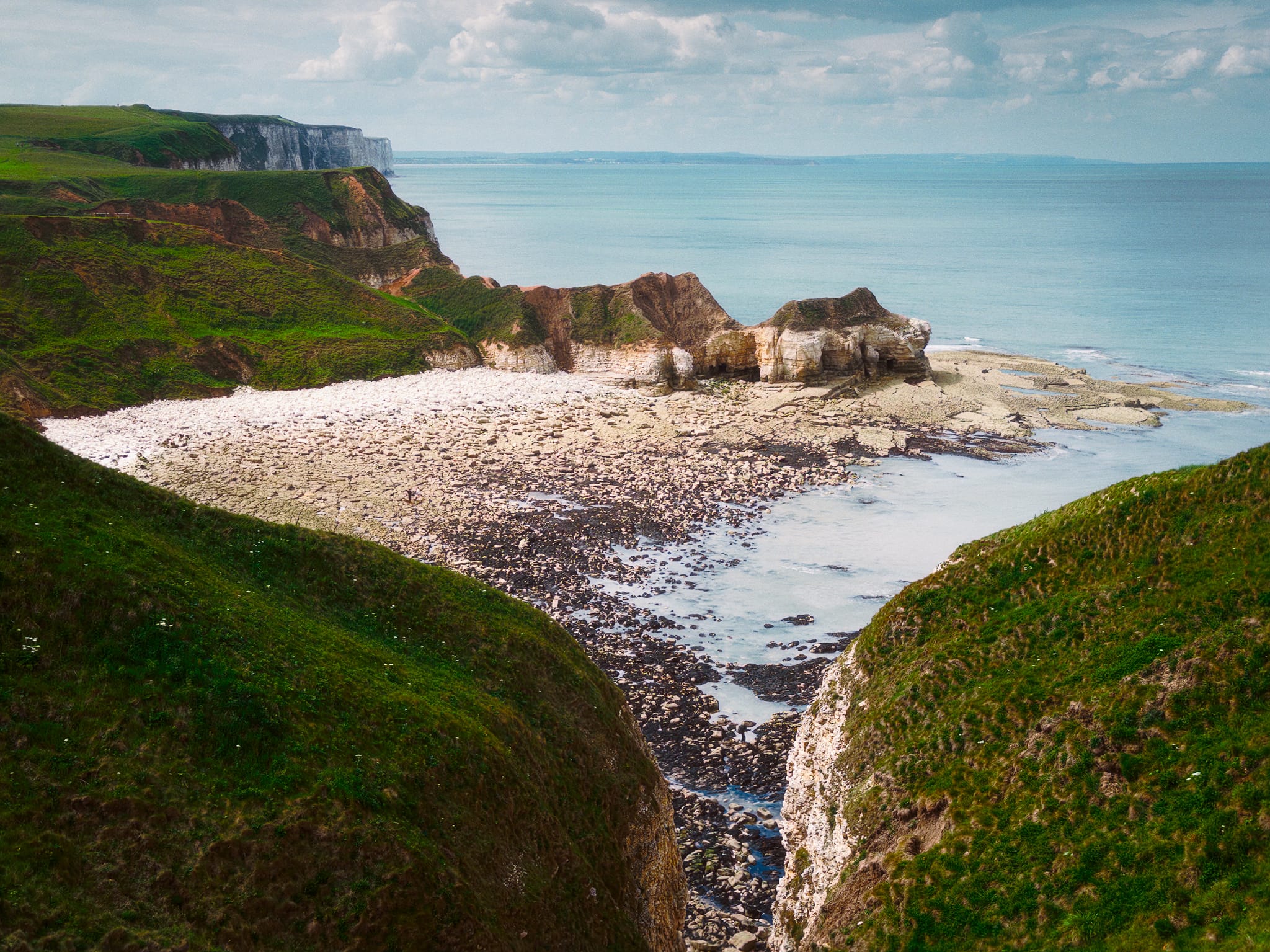
Just one mile east of the famous town of Whitby, Saltwick Bay is a beautiful sandy bay hemmed in by towering cliffs. On its northern side is Saltwick Nab, a headland separated from the rest of the cliffs that juts out into the North Sea. It was here that Alum was quarried. Alum was mainly used to clean water, because it helps gather together dirt and tiny particles so they can be easily removed. It’s also commonly used in preserving food, especially in pickling, as well as in medicines and beauty products, because it can tighten and tone tissues. At the Bay’s southern end is the distinct and islated sea stack pinnacle of Black Nab near which can be found the wreckage of the Admiral Van Tromp fishing vessel.
We enjoyed beautiful light as the tide started to make its way in, so we were sure to get our compositions in quickly before the incoming tide blocked off access.
All photos taken on my iPhone 17 Pro Max. RAWs developed in Lightroom, then edited and finalised in Photoshop.
Saltwick Bay, North Yorkshire, Summer © 2026 by Ian Cylkowski is licensed under CC BY-NC-SA 4.0.
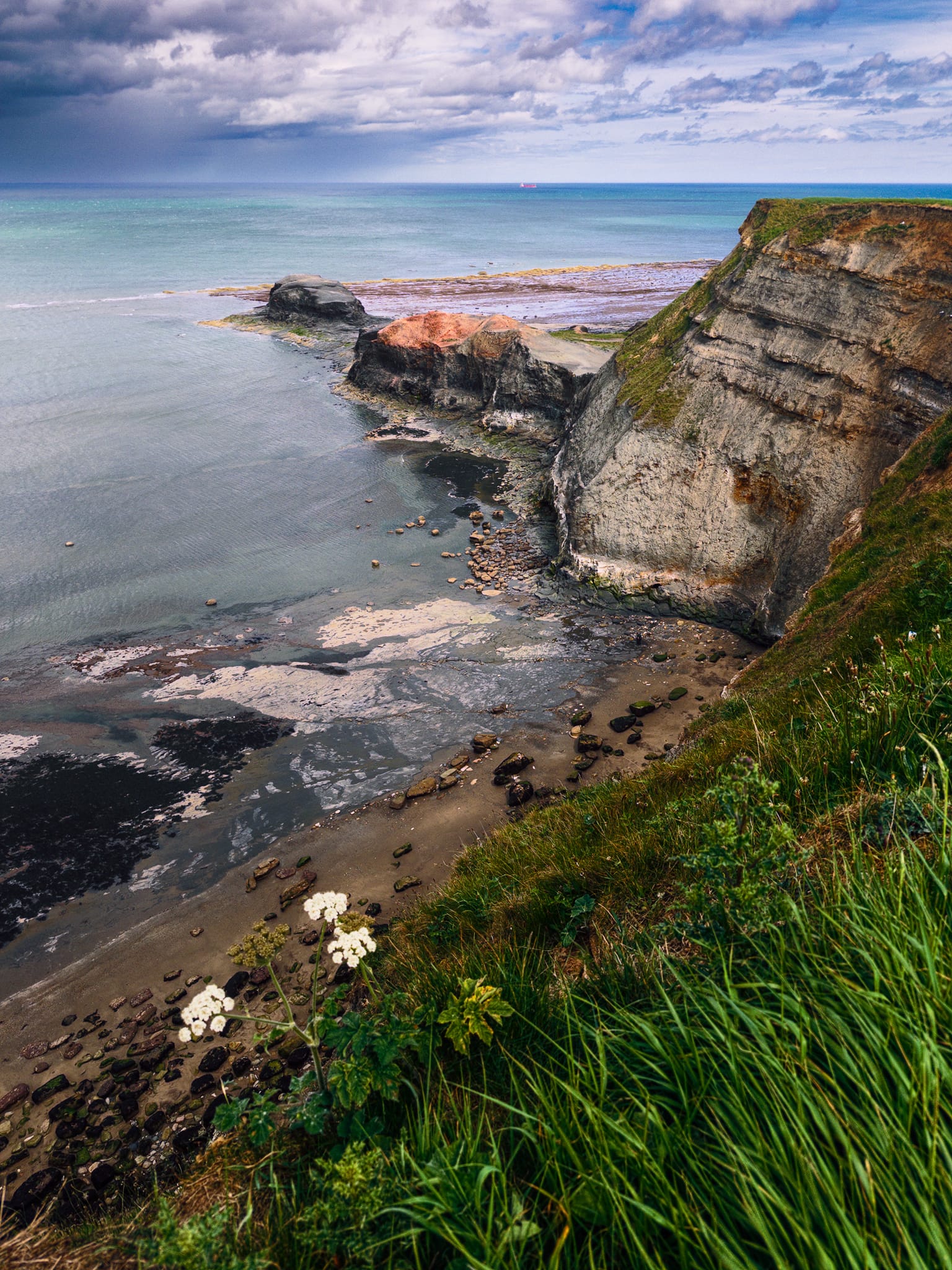
Saltwick Nab as we approached the bay along the cliffs from the west. Evidence of quarring is abundant. Out to the sea a storm dumps water from the clouds. Thankfully, away from land.
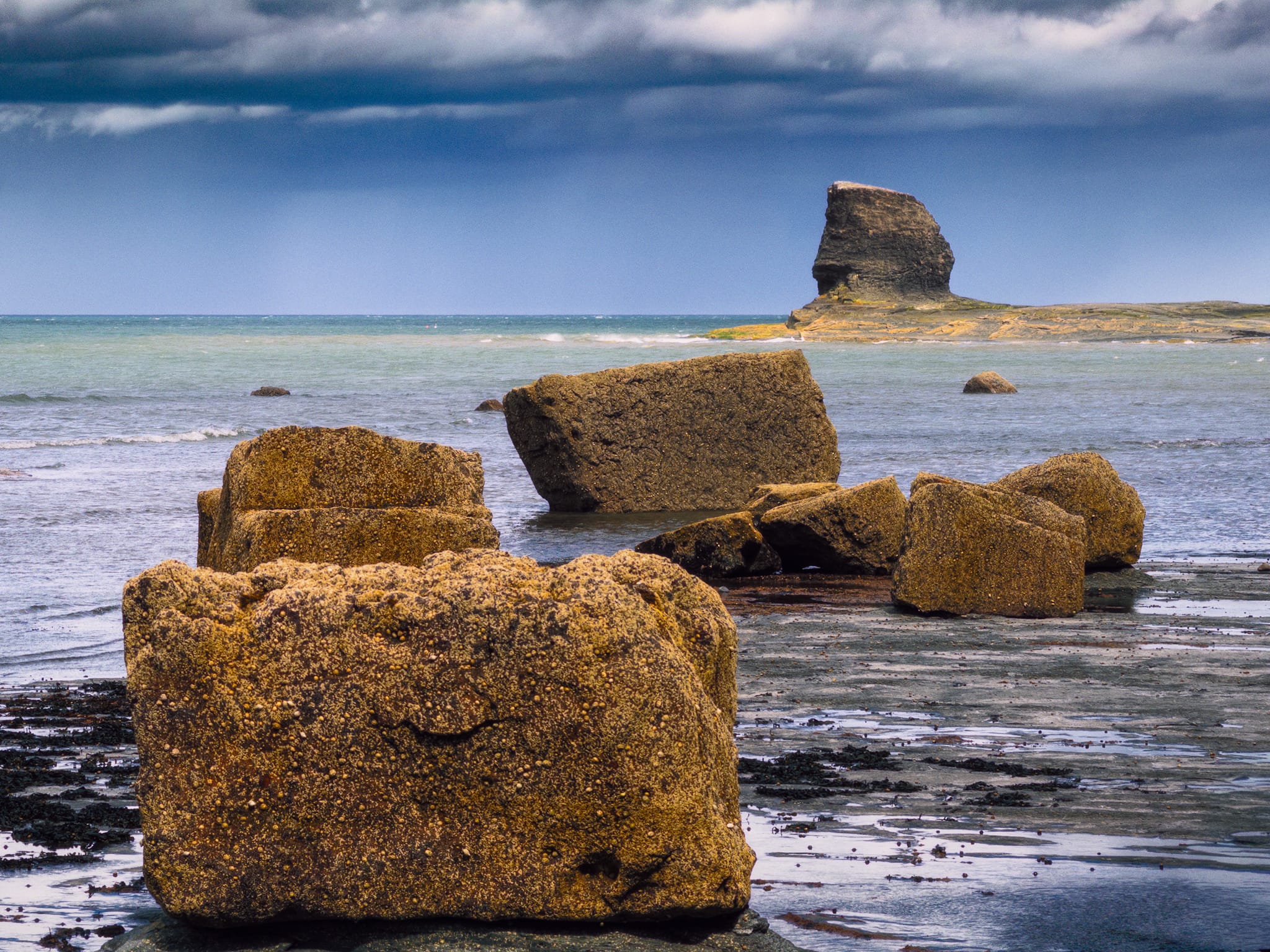
Upon dropping down into the bay via the steep cliff path, I immediately made a beeline towards Black Nab beneath the bay’s southeastern cliffs. I knew the tide was out and starting to come in, so I endeavoured to “nab” as many compositions near Black Nab as I could.
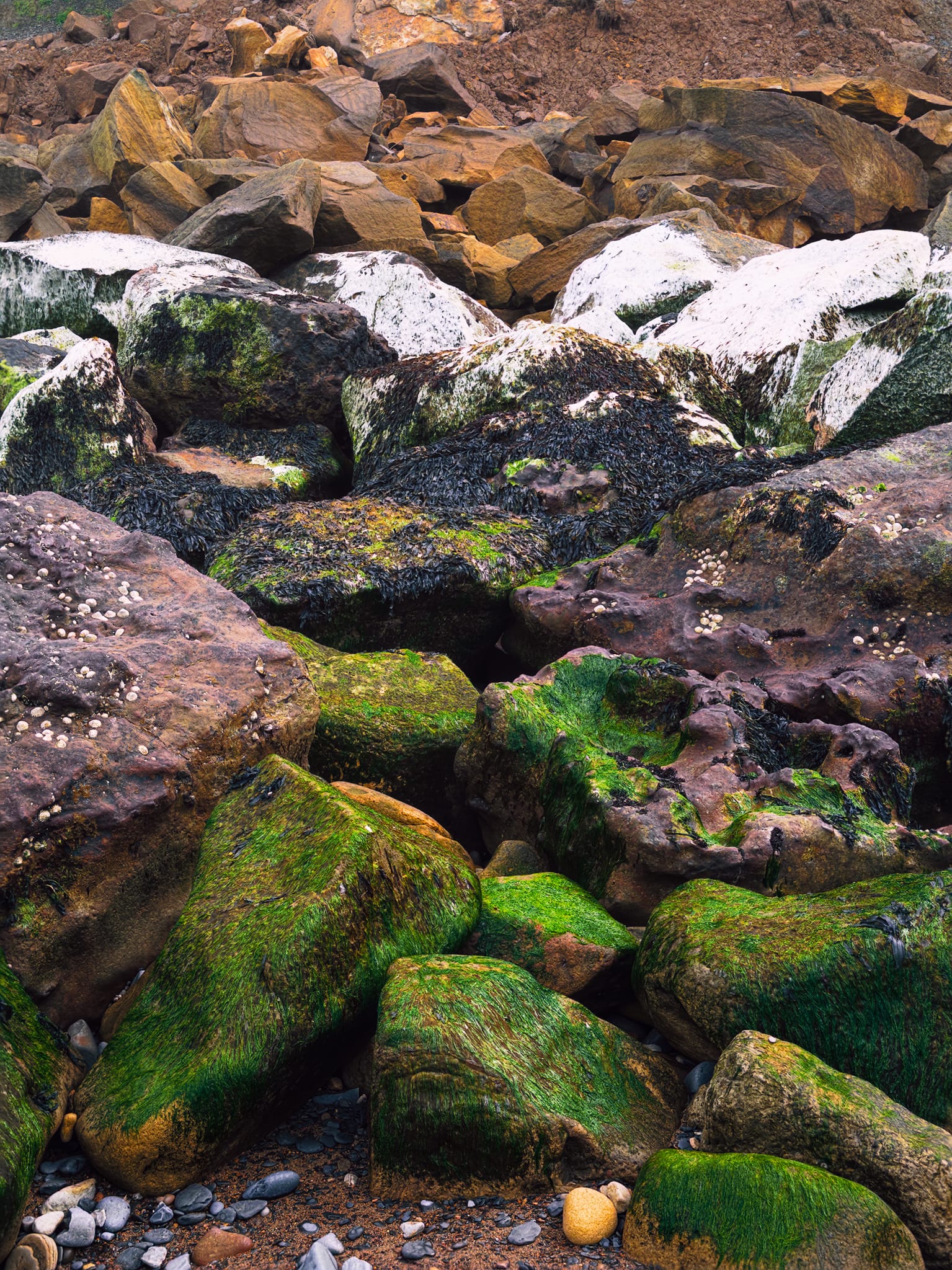
Chunks and boulders that had fallen off the cliff laid in eternal rest, subject to the ever-moving sea and wind. A beautiful layering of texture and colour.
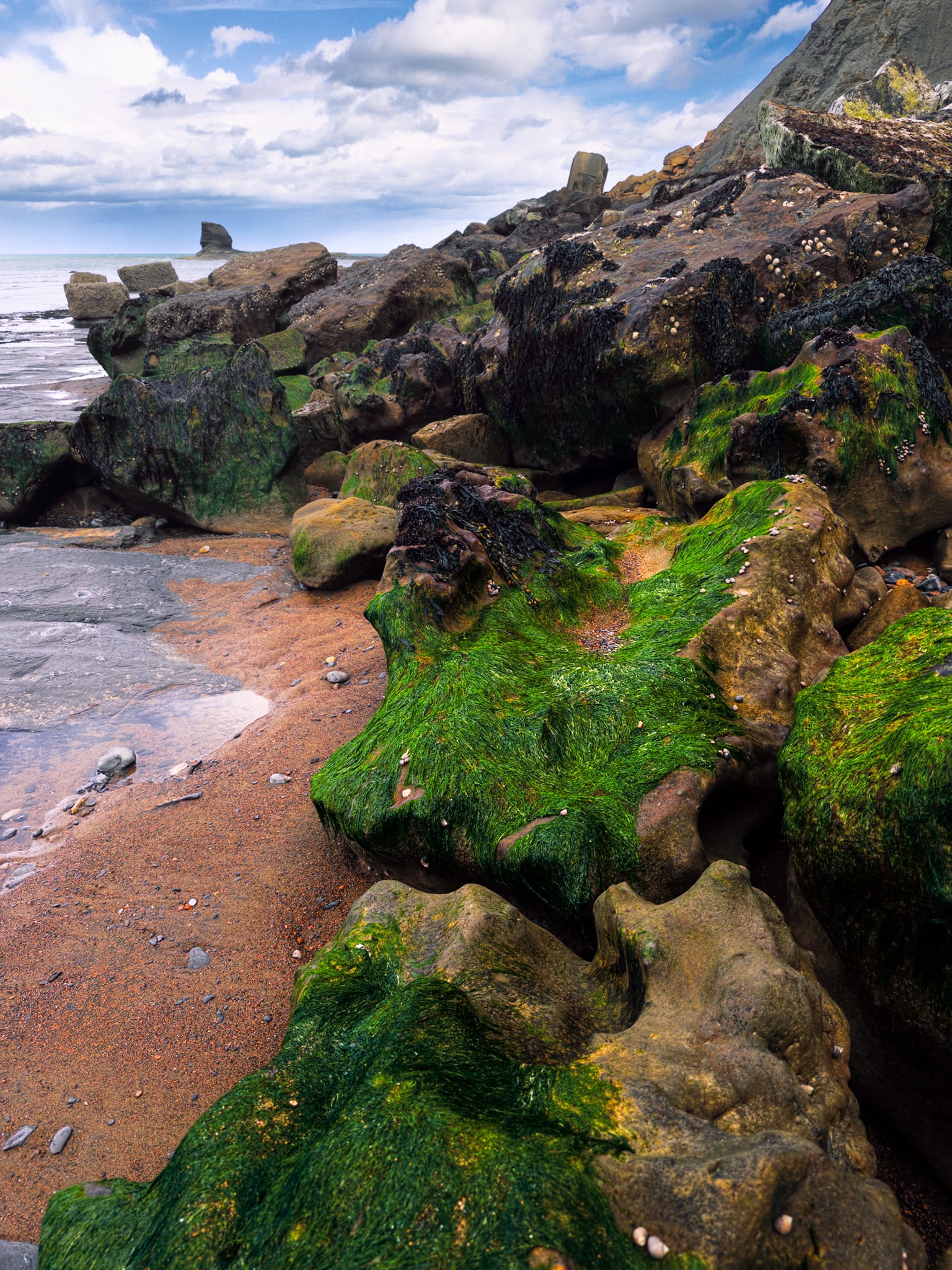
A more expansive composition from the boulder field, this time including Black Nab as well.
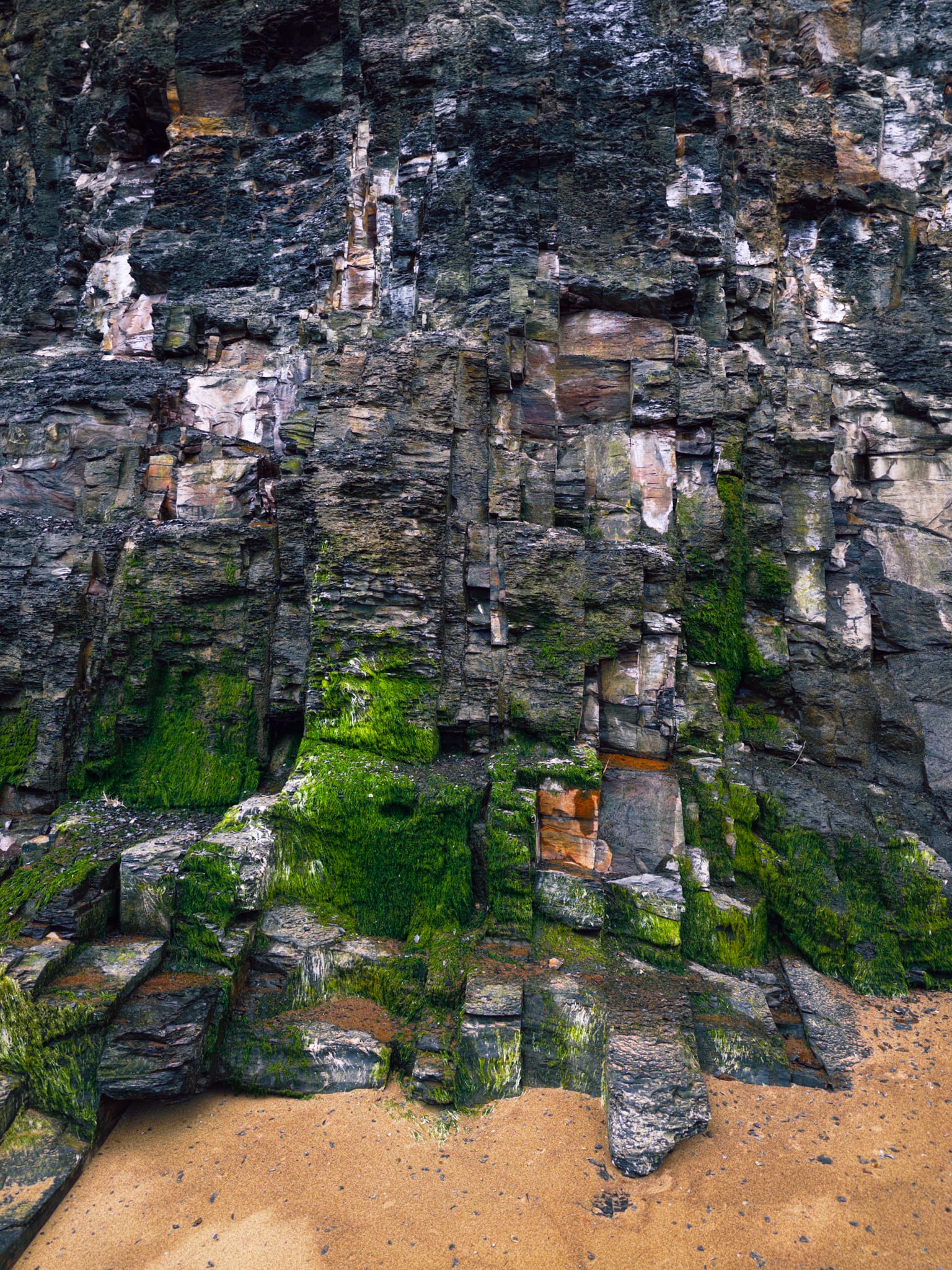
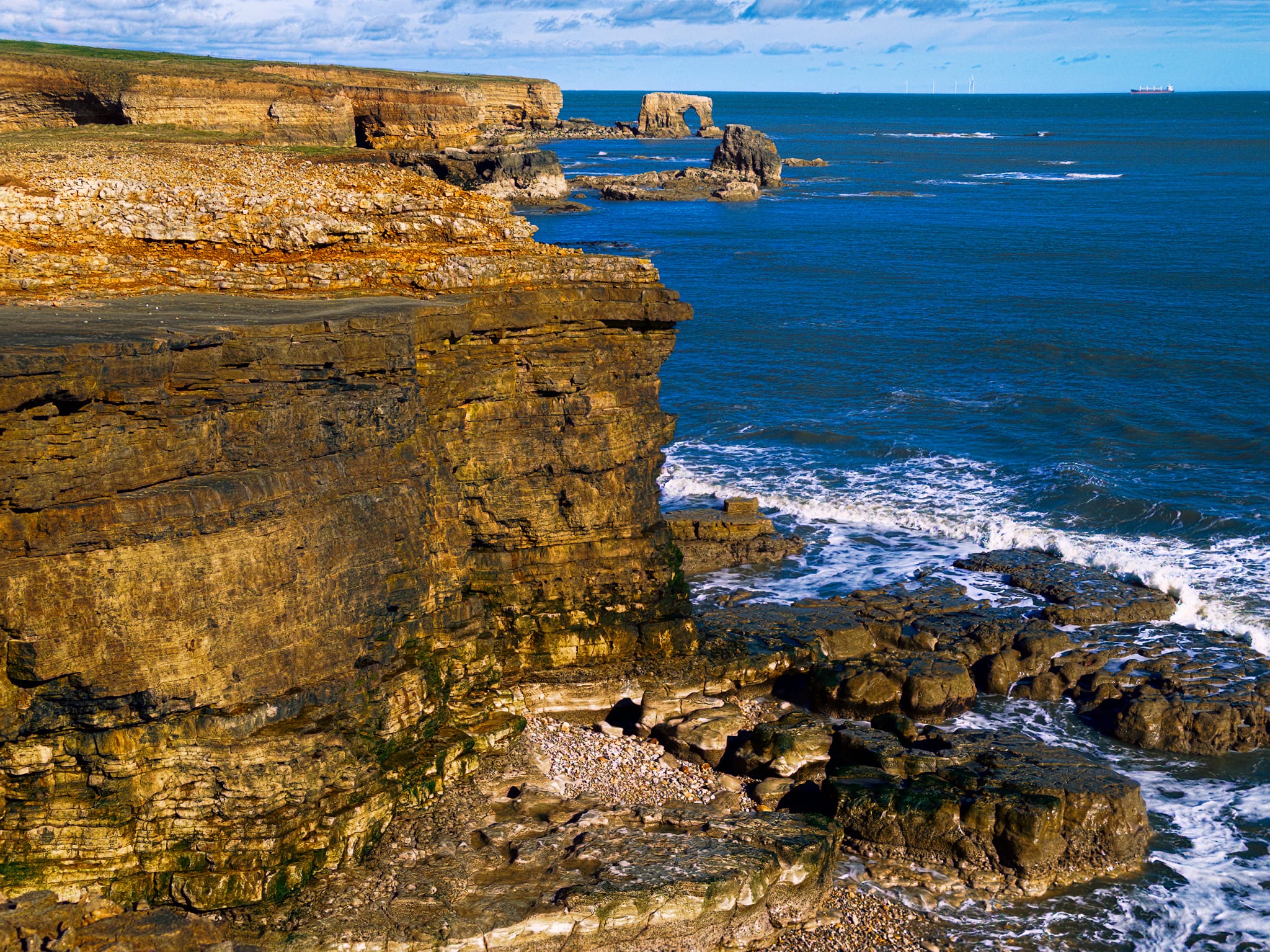
The cliffs are Lower Jurassic shale, ~180 million years old. Vertical jointing cutting across the horizontal bedding gives that fluted look. Sea erosion has exploited these joints to create the paler, more broken sections. Green algae marks the tidal zone at the base.
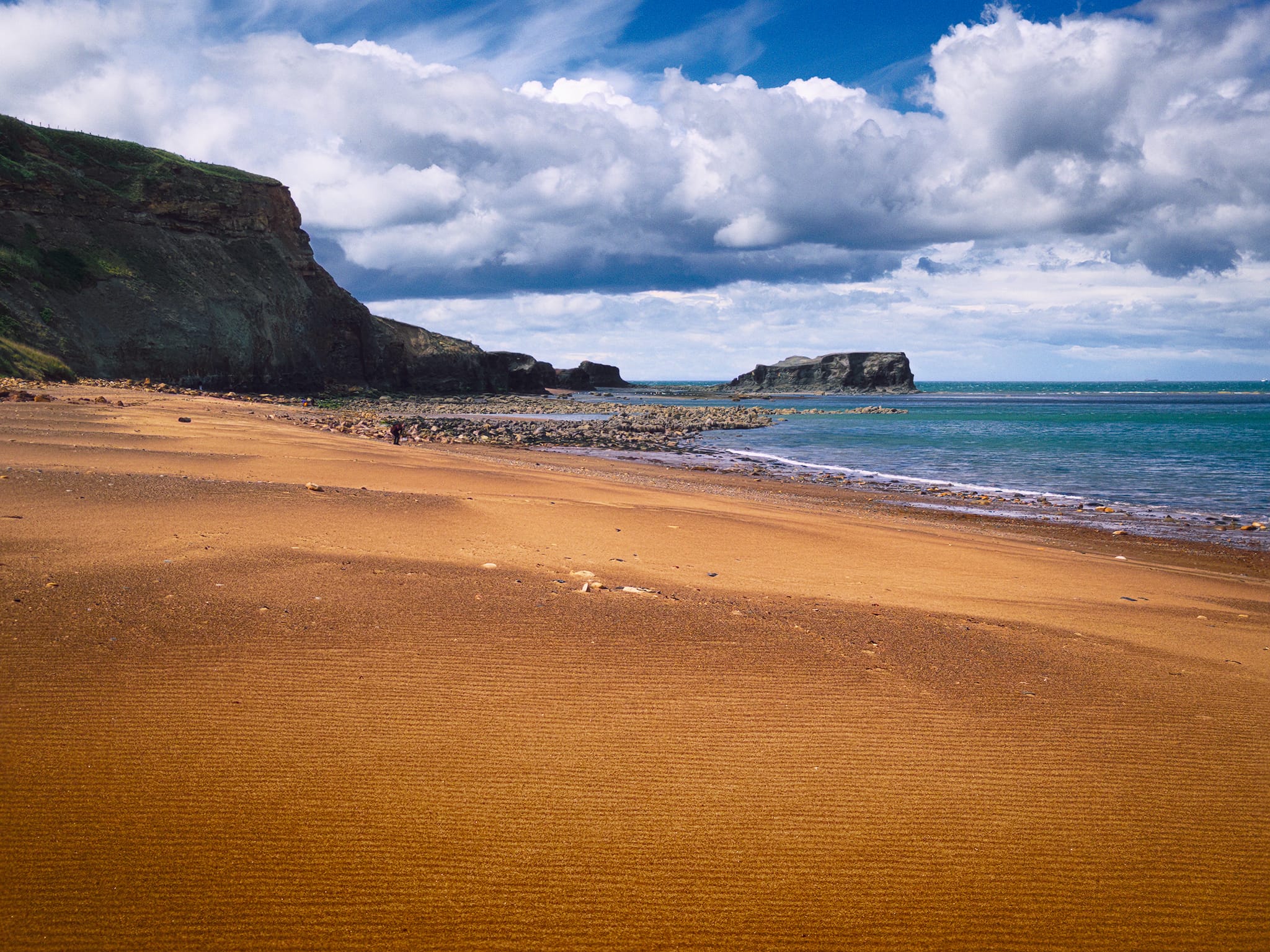
From the southeastern cliffs, looking back across the bay towards the northeastern cliffs and the distinctive Saltwick Nab.
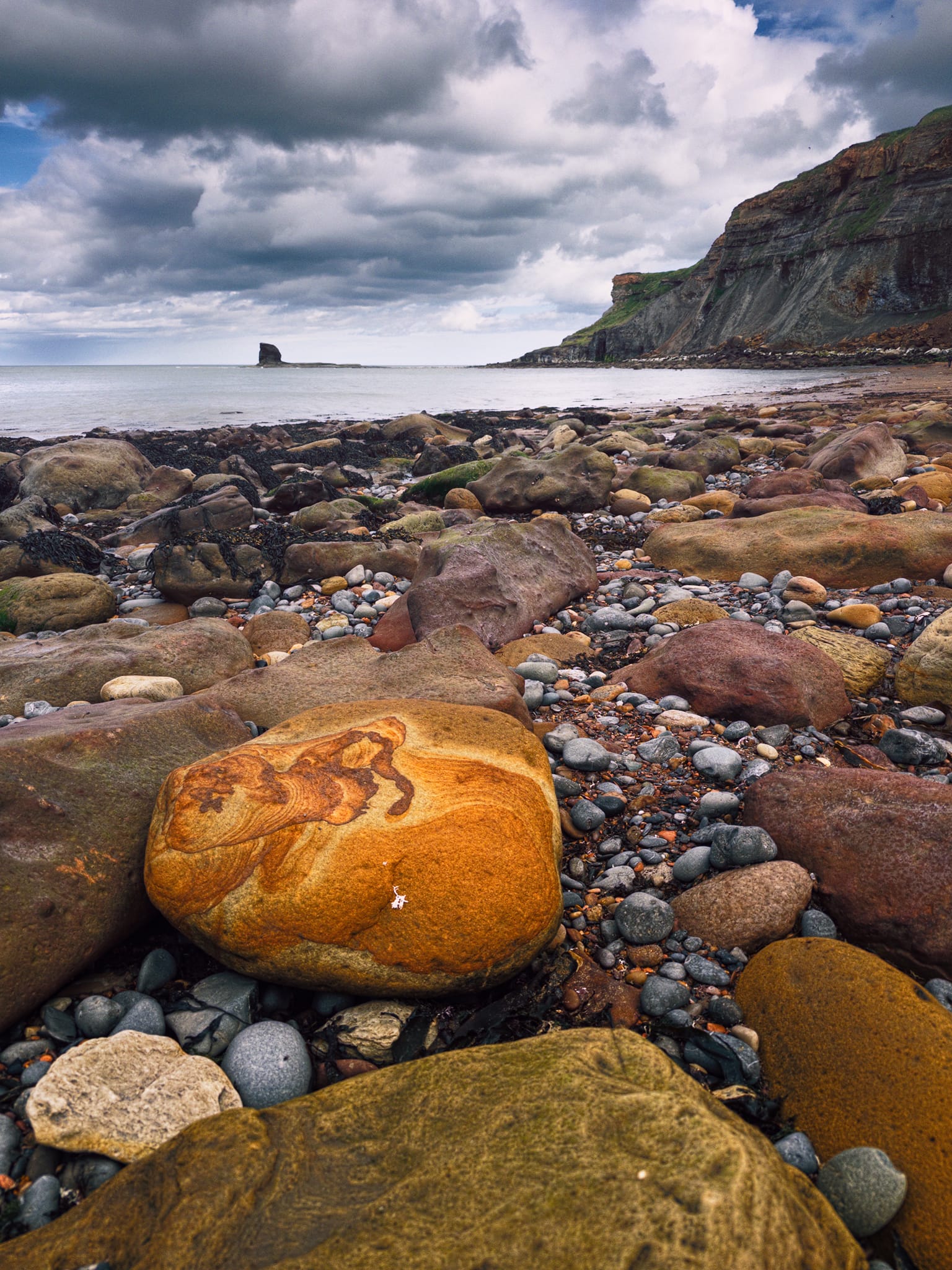
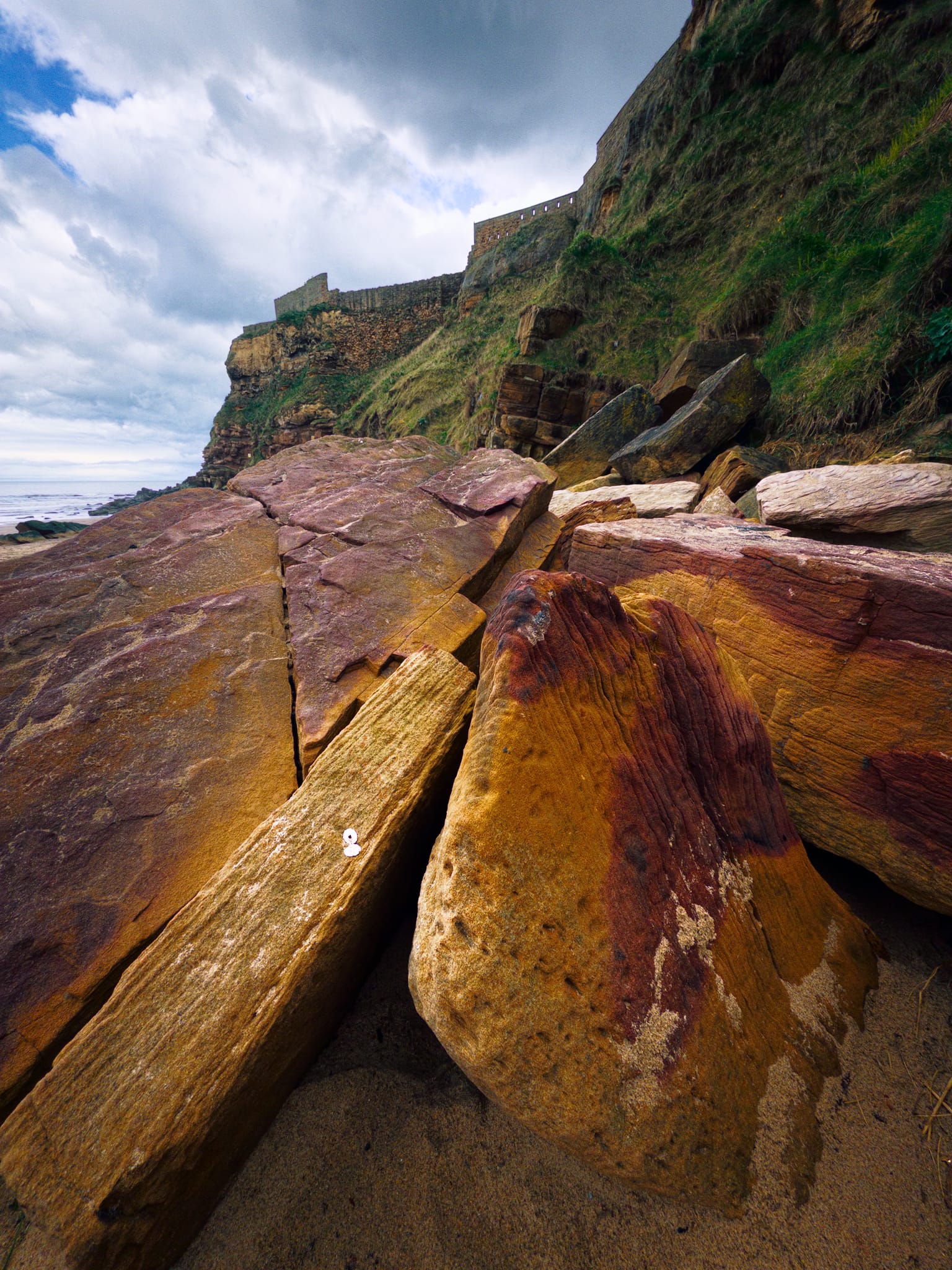
The bay is littered with beautifully sculpted rocks and boulders, including this lovely golden sandstone boulder. The swirling orange/brown pattern is Liesegang banding, rings of iron oxide (limonite/goethite) precipitated by groundwater diffusing through the porous rock after it was already cemented. In the distance, Black Nab all on its own.
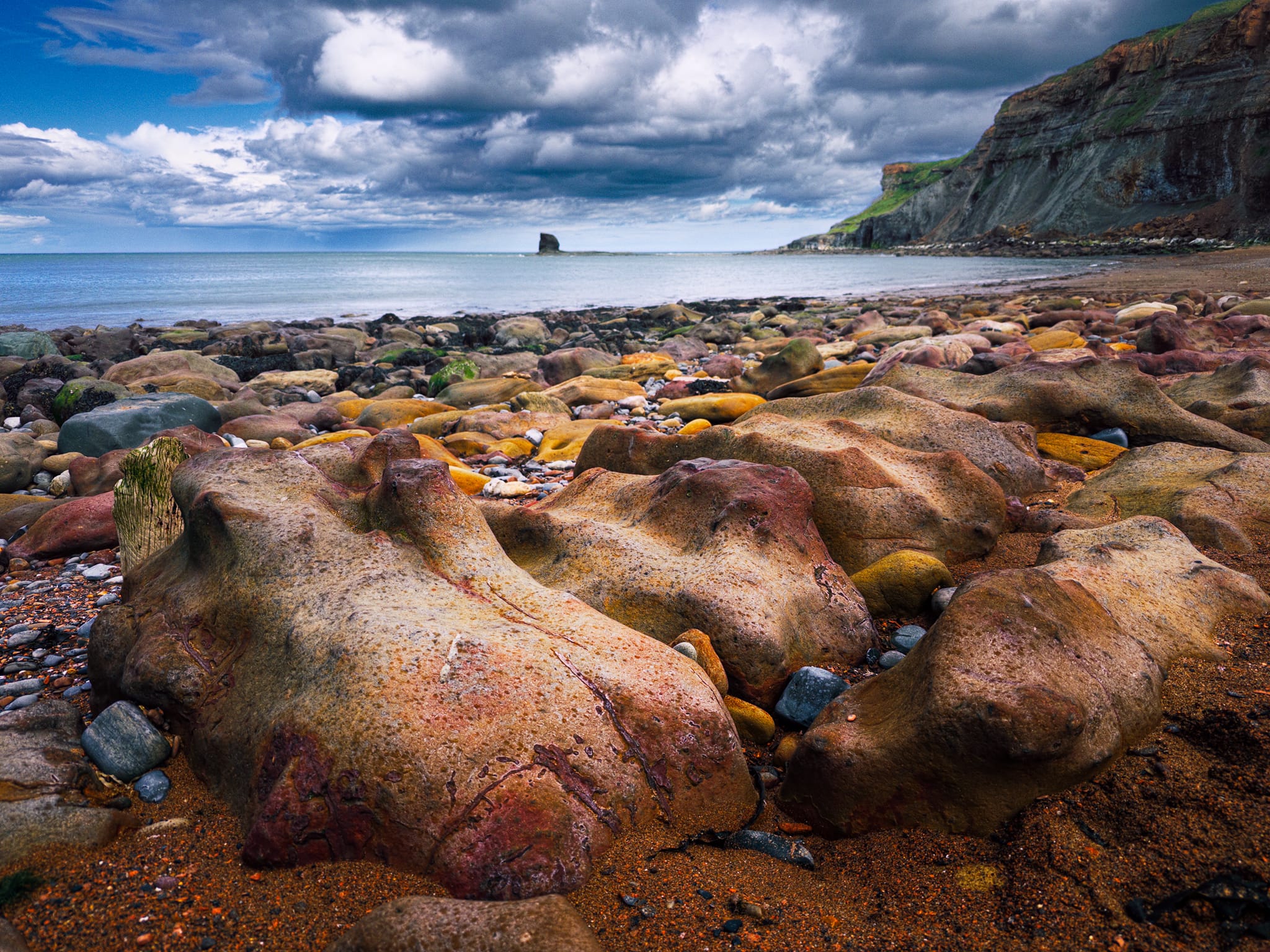
Some more beautifully sculptured boulders. Rounded and smoothed by wave and sand abrasion. The bulbous, hollowed shapes are differential erosion: softer patches wear faster than the iron-cemented parts, leaving that pitted, sculpted texture.
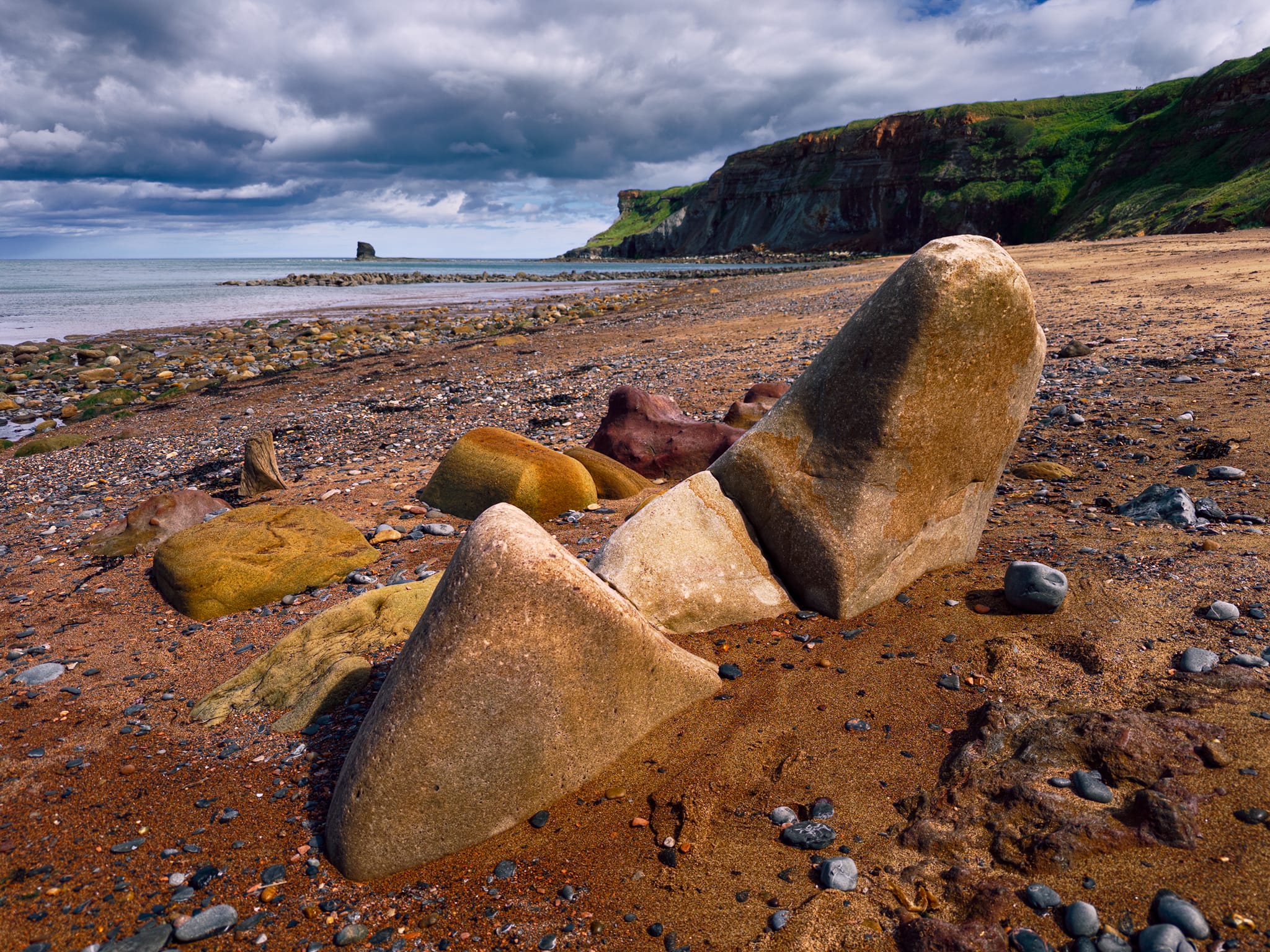
This little group fascinated me. These are sandstone blocks, fallen from the cliff and then tilted upright by wave action digging sand from underneath as the tide moves them. The wedge shapes come from the rock’s natural jointing, they fracture along those planes when they break off the cliff face.
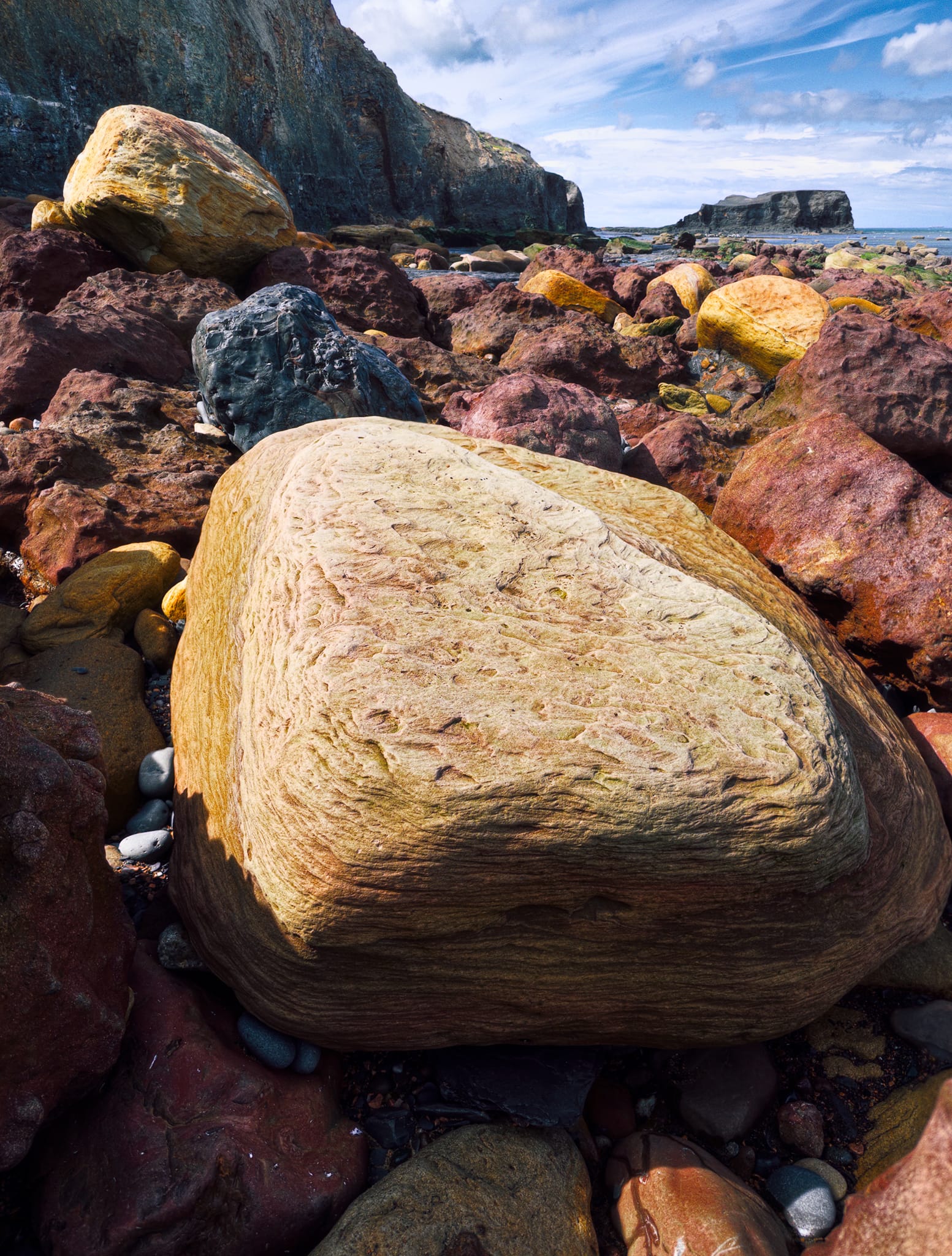
Now making my way to the northeastern cliffs, gingerly picking my way through the boulder field and finding compositions towards Saltwick Bay. Here the same iron-oxide chemistry gives some lovely colours: red/purple boulders are iron-rich sandstone, buff/gold ones are more leached, the swirled foreground boulder shows Liesegang banding, and the dark grey boulder is likely shale.
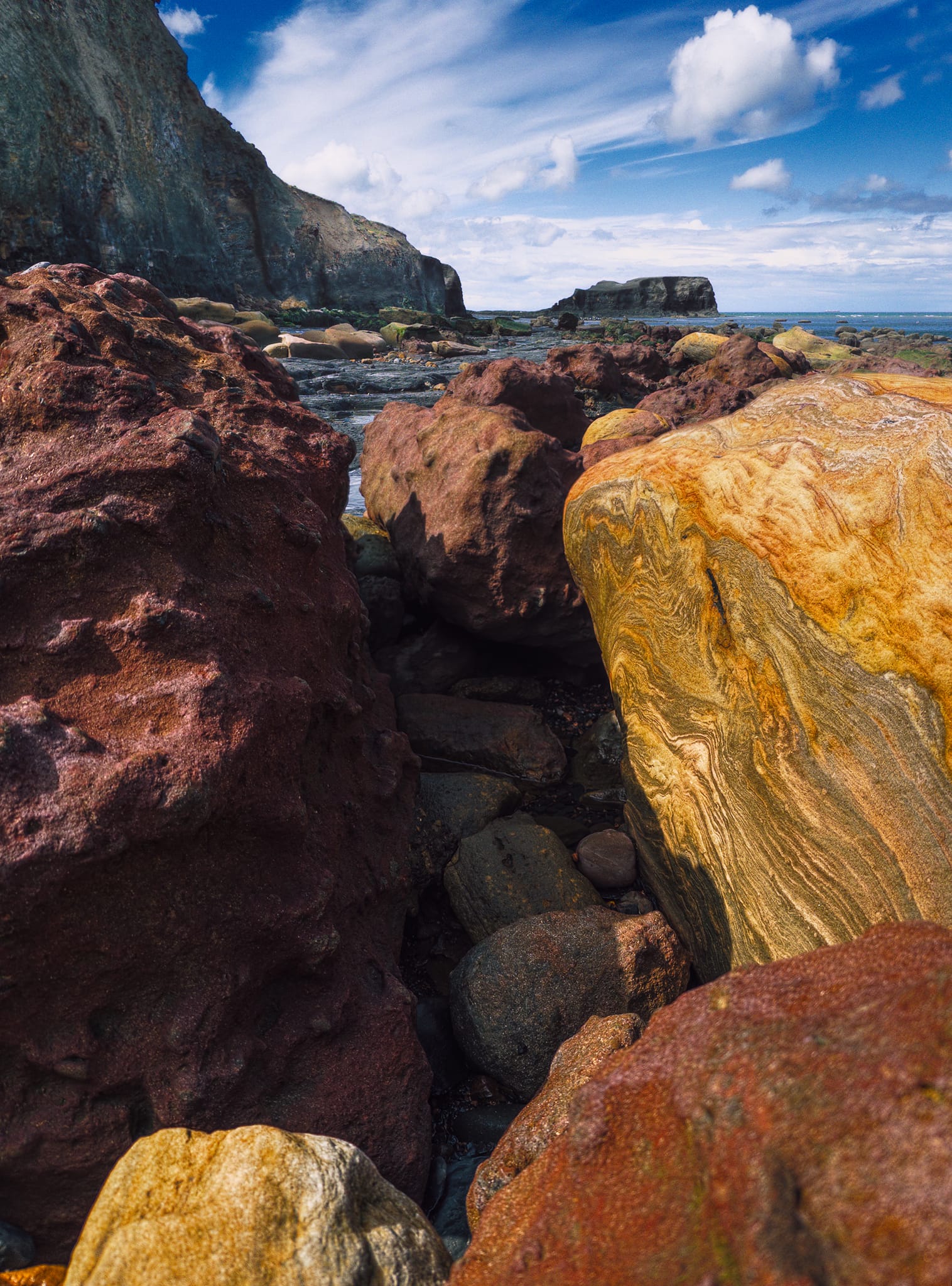
In my head I call these the Joe Cornish boulders, after a video I saw of famous British landscape photographer, Joe Cornish, demonstrating the use of Lee ND grad filters.
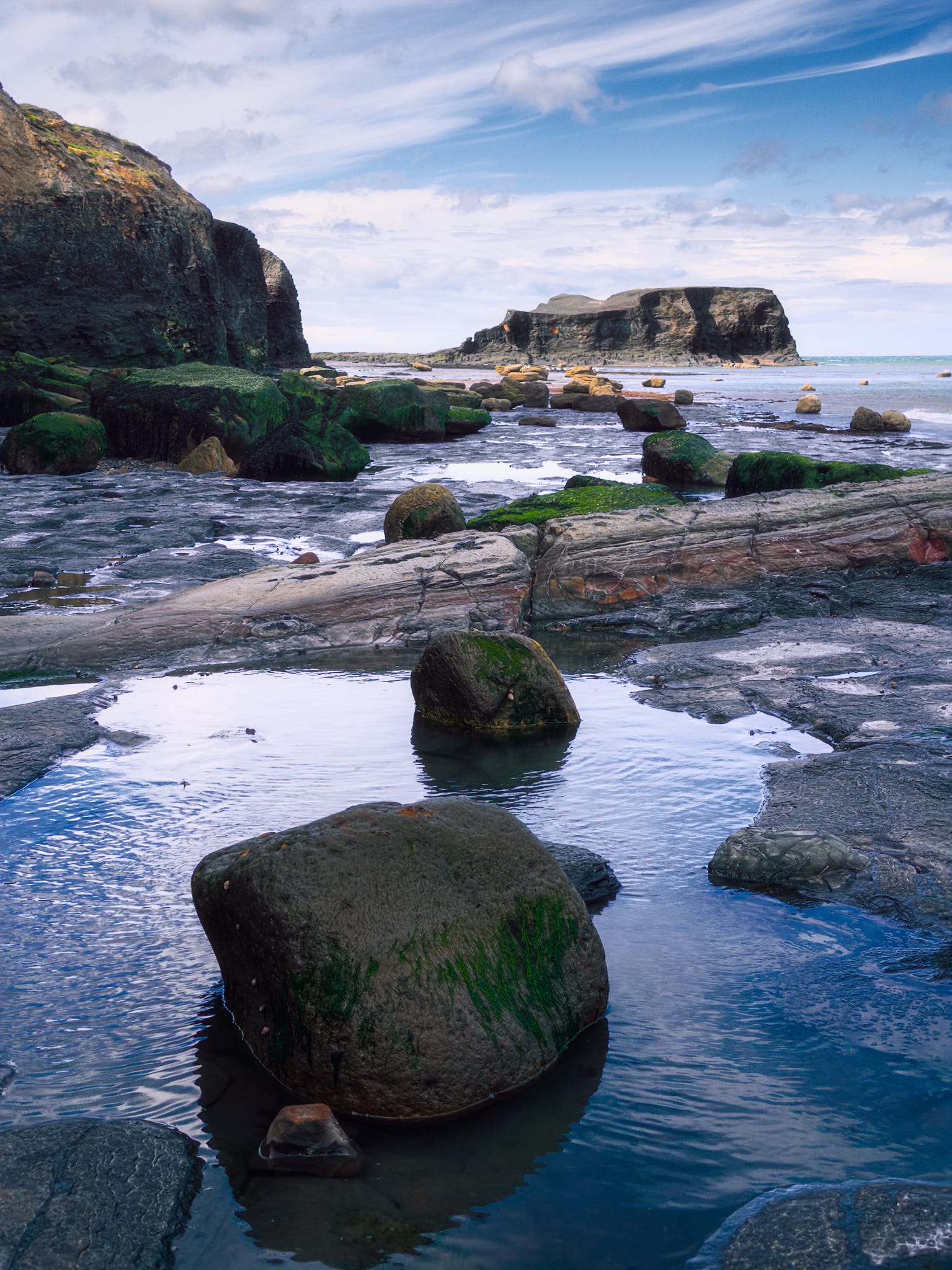
That’s Saltwick Nab in the distance, the flat-topped headland (“North Batts” area). A beautiful wave-cut shale platform in the foreground cuts across with algae-covered boulders sitting in tidal pools. Green algae marks tidal exposure zones; the smooth, flat bedding surfaces are Alum Shale, kept polished by regular wave action.
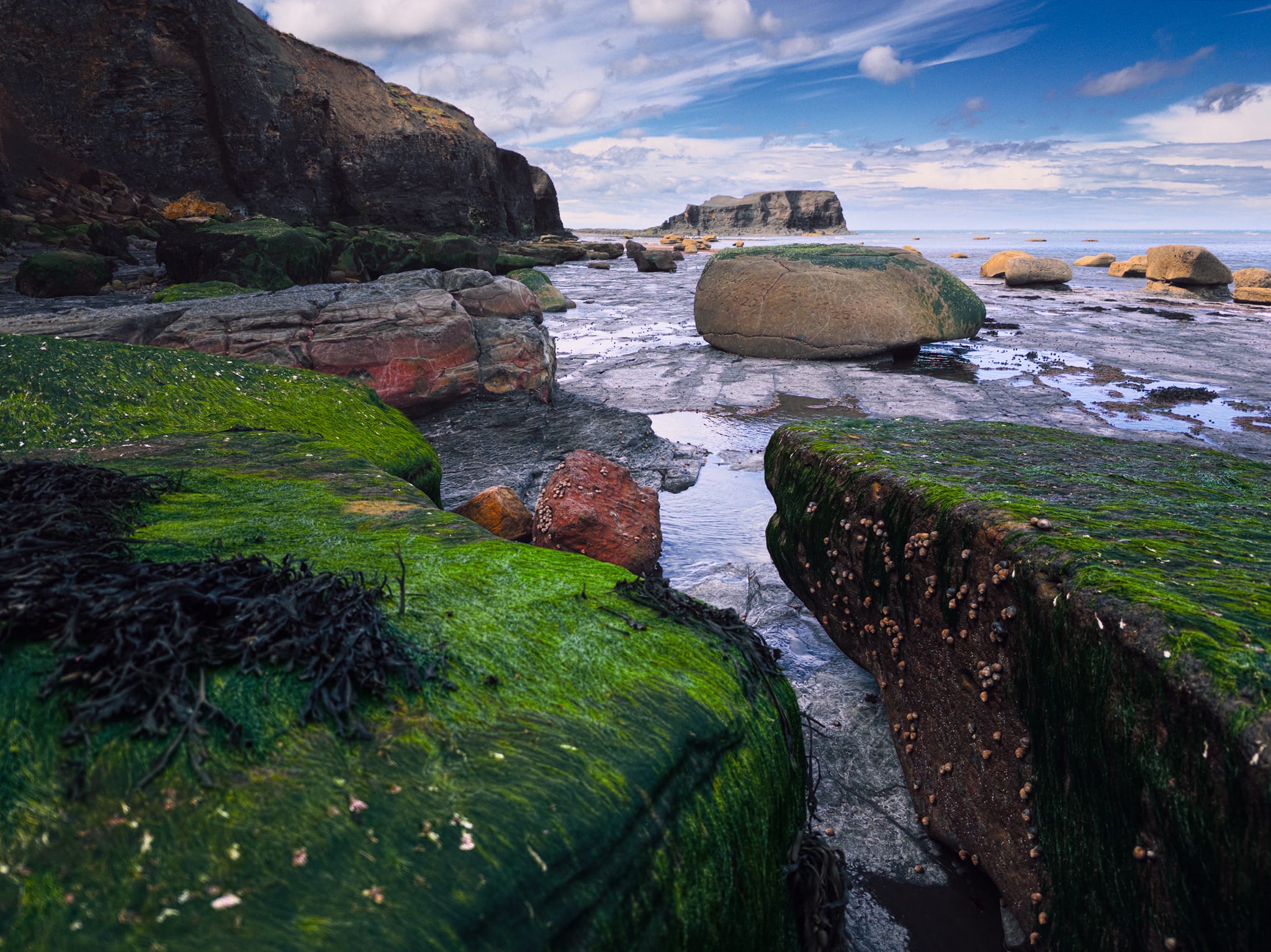
An attempt at some degree of focus stacking use my iPhone. I liked the little channel created by the algae-covered boulders, leading a way into the composition.