Is a visit to the Yorkshire coast complete without seeing Whitby?
After an almost impossibly perfect and idyllic summer’s day, cloud, wind, and rain arrived to cast the Yorkshire coast in a dark mood.
Not always a bad thing, photographically.
Upon arriving at Whitby, I’d realised that it’d been over a decade since I’d last visited. That’s basically a sin, right?
Whitby is old. Originally known as Streoneshalh — meaning “Streon’s nook of land” — by the Anglo-Saxons, the town gained its modern name from the Vikings invaders: Hvítabýr, meaning “Hvíta’s farmstead”.
King Oswiu of Northumbria founded a monastery at Streoneshalh in 657 AD, led by Abbess Hild. Vikings destroyed it c.867–870. After the Norman Conquest, William de Percy refounded it in 1078 as a Benedictine house dedicated to St Peter and St Hilda.
Whitby prospered in the 1700-1800s through whaling, shipbuilding, and fishing, later boosted by railway-driven tourism.
Also, you bet we had some crackin’ fish and chips.
All photos taken on my iPhone 17 Pro Max. RAWs developed in Lightroom, then edited and finalised in Photoshop.
Whitby, North Yorkshire, Summer © 2026 by Ian Cylkowski is licensed under CC BY-NC-SA 4.0.
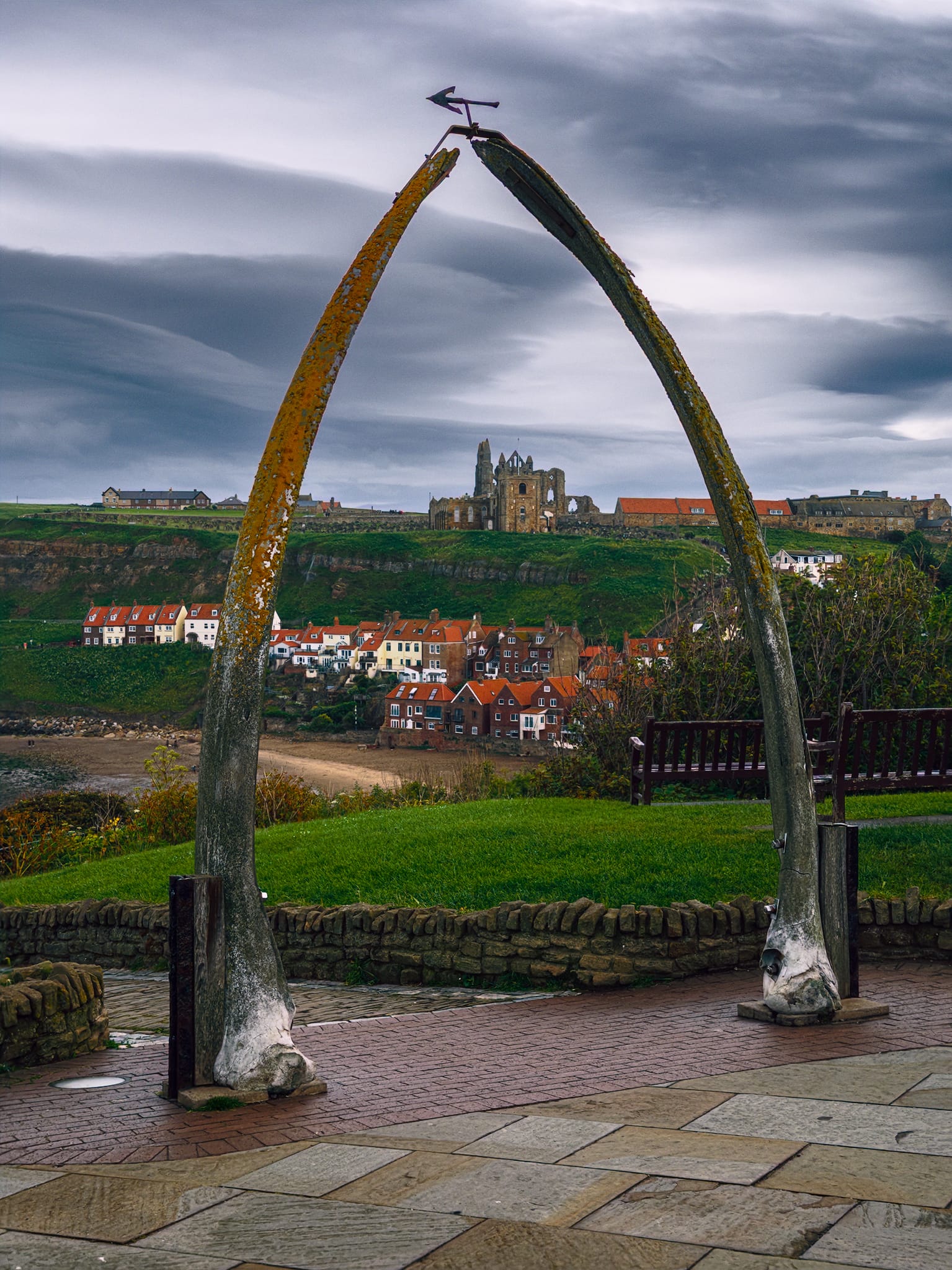
One of Whitby’s most iconic features as you approach from the West Cliffs. An archway made from whale bones, to celebrate the town’s whaling past, is used to frame the distant St Mary’s Church and the ruins of Whitby Abbey behind it.
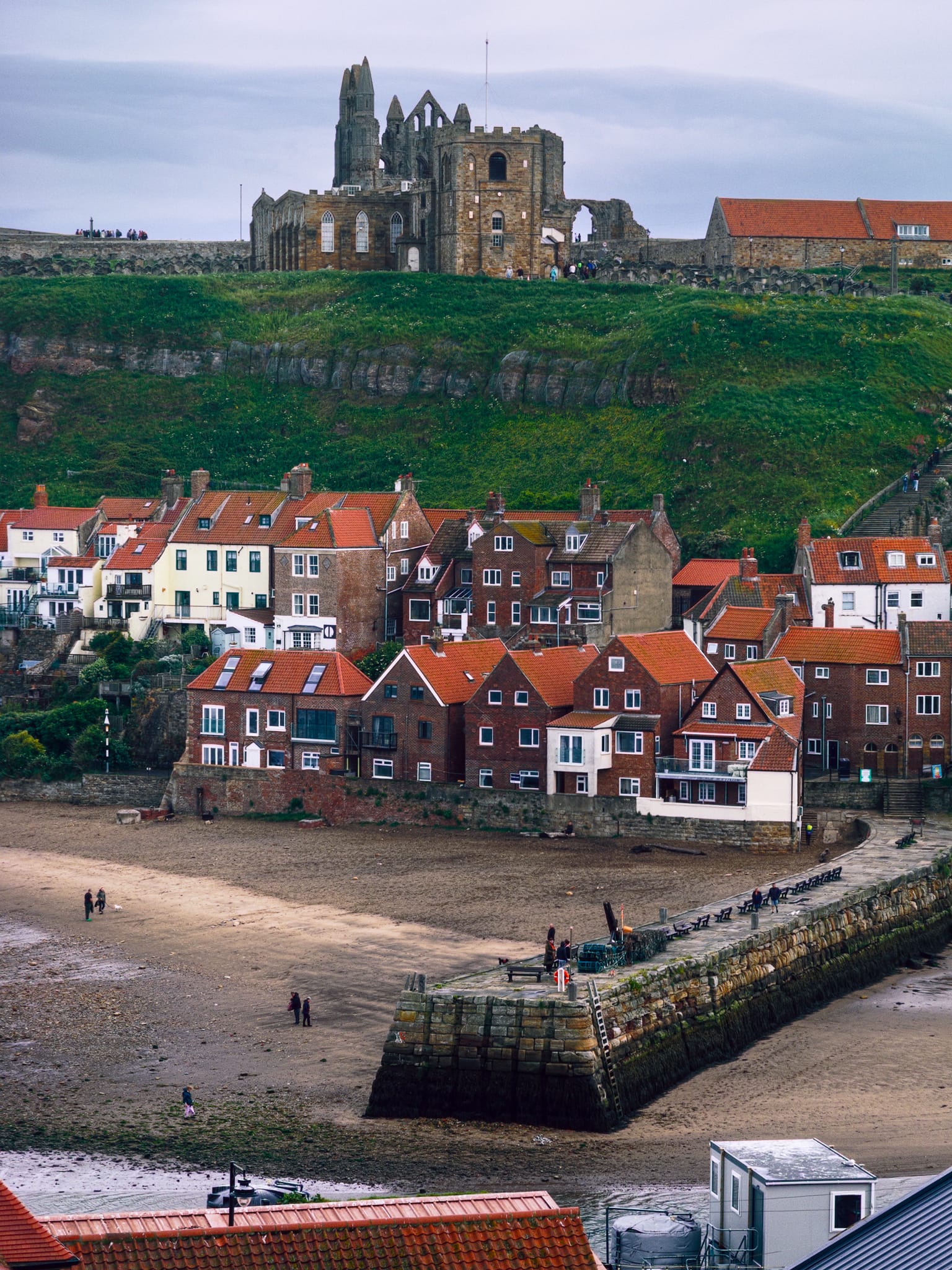
A tighter composition of the East Cliffs, showing off the older part of Whitby with the church and abbey commanding a presence above.
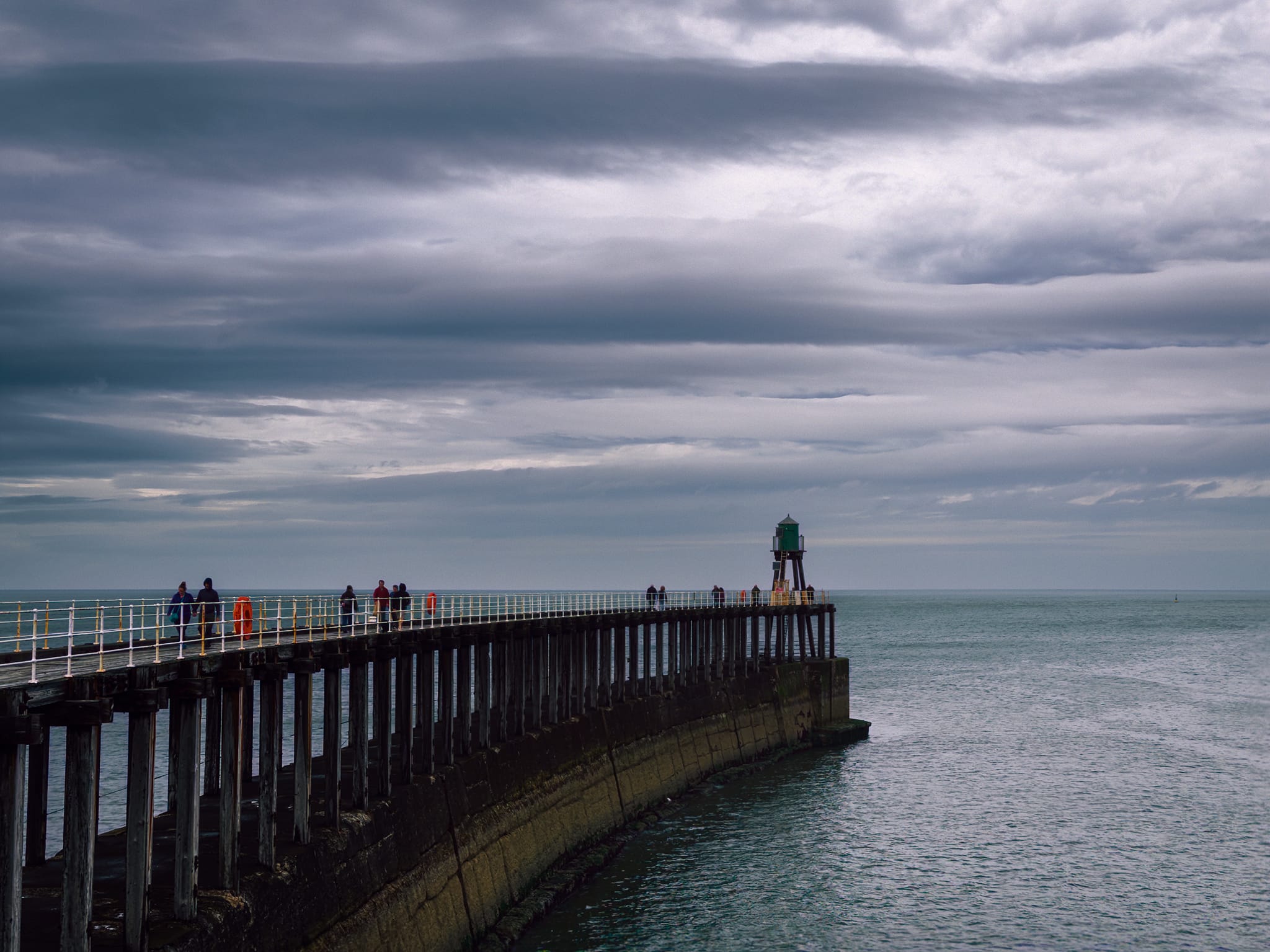
Our first instinct was to head along the West Pier, which juts far out into the North Sea. The arrival of wind and rain gaves us some fantastic cloud layers and formations to shoot with the West Pier Light.
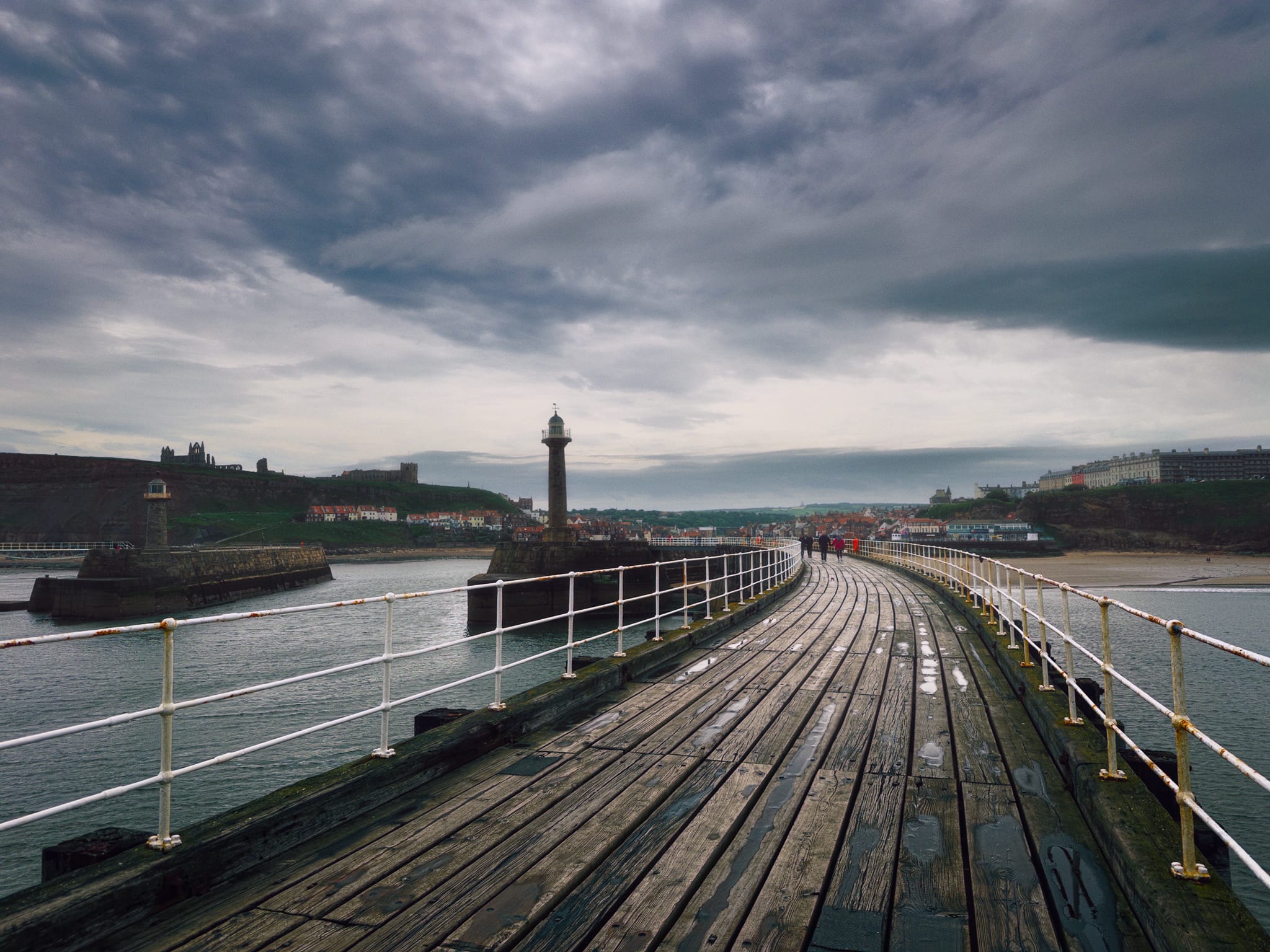
Looking back from the end of the West Pier, clouds racing above. On the cliffs to the far left is Whitby Abbey with St Mary’s Church a little further in. To the left in the sea is Whitby East Pier Lighthouse, with the West Pier Lighthouse more central. To the right on the cliff is the newer part of Whitby, with Victorian buildings constructed to accommodate Whitby’s then growing status as a tourist destination.
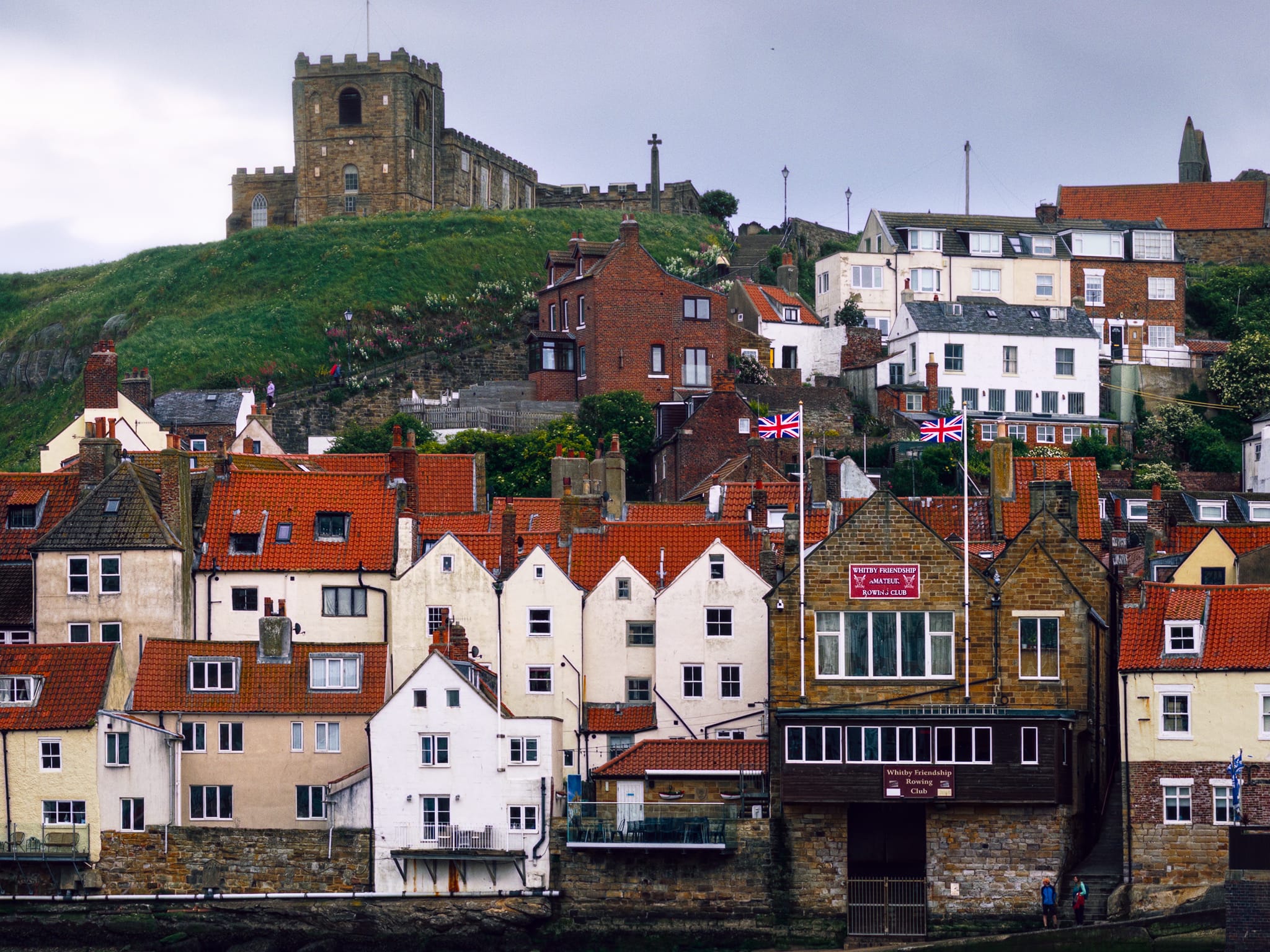
A tighter shot of the seemingly chaotic arrangement of houses, pubs, restaurants, and shops that make up the lower slopes of Whitby’s east cliffs. A bit of a mess, but beautiful nonetheless.
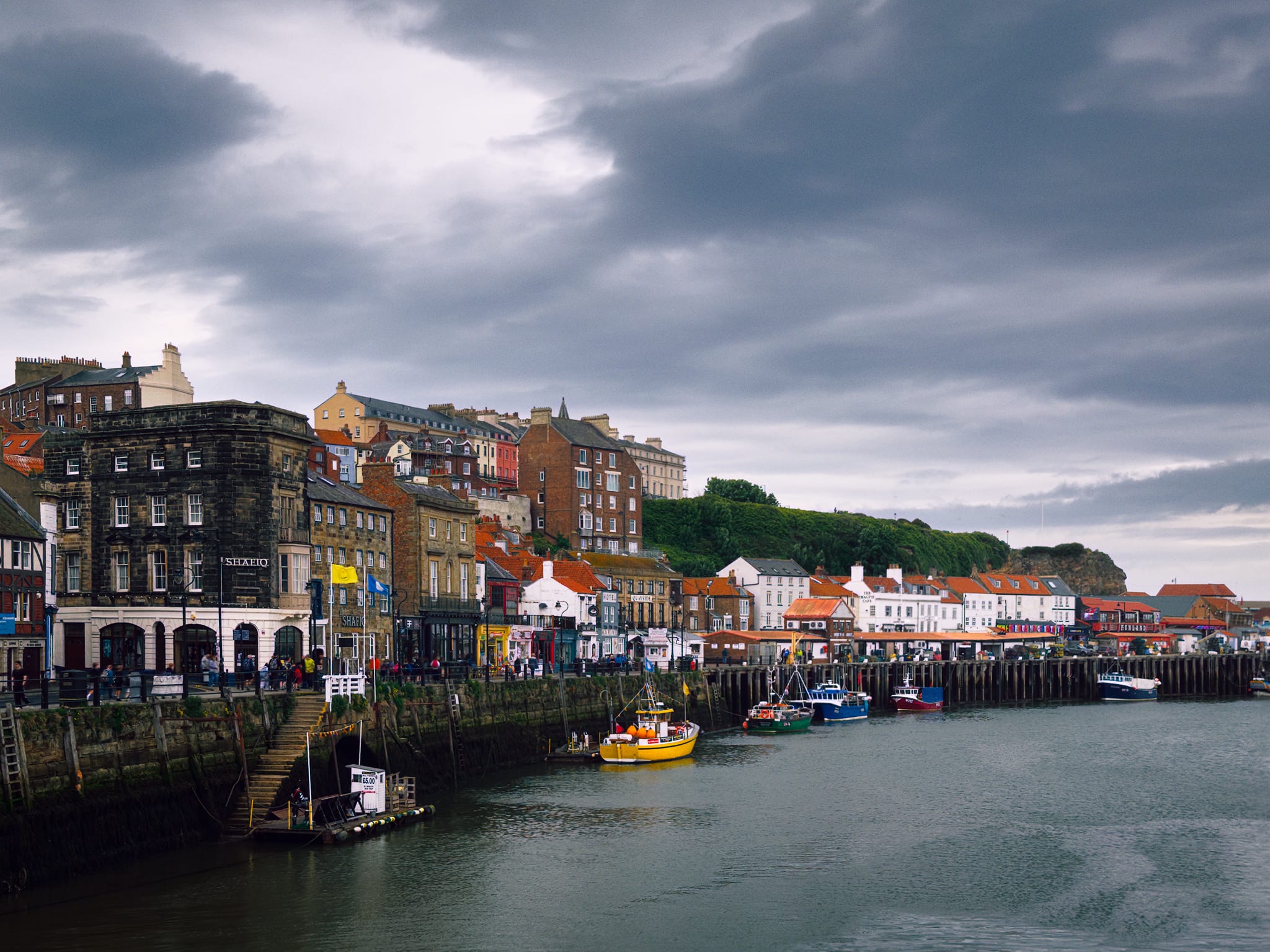
From Whitby’s swing bridge, a lovely view opens up of Whitby’s western seafront area, filled with pubs, restaurants, chippies, arcades, and lots more.
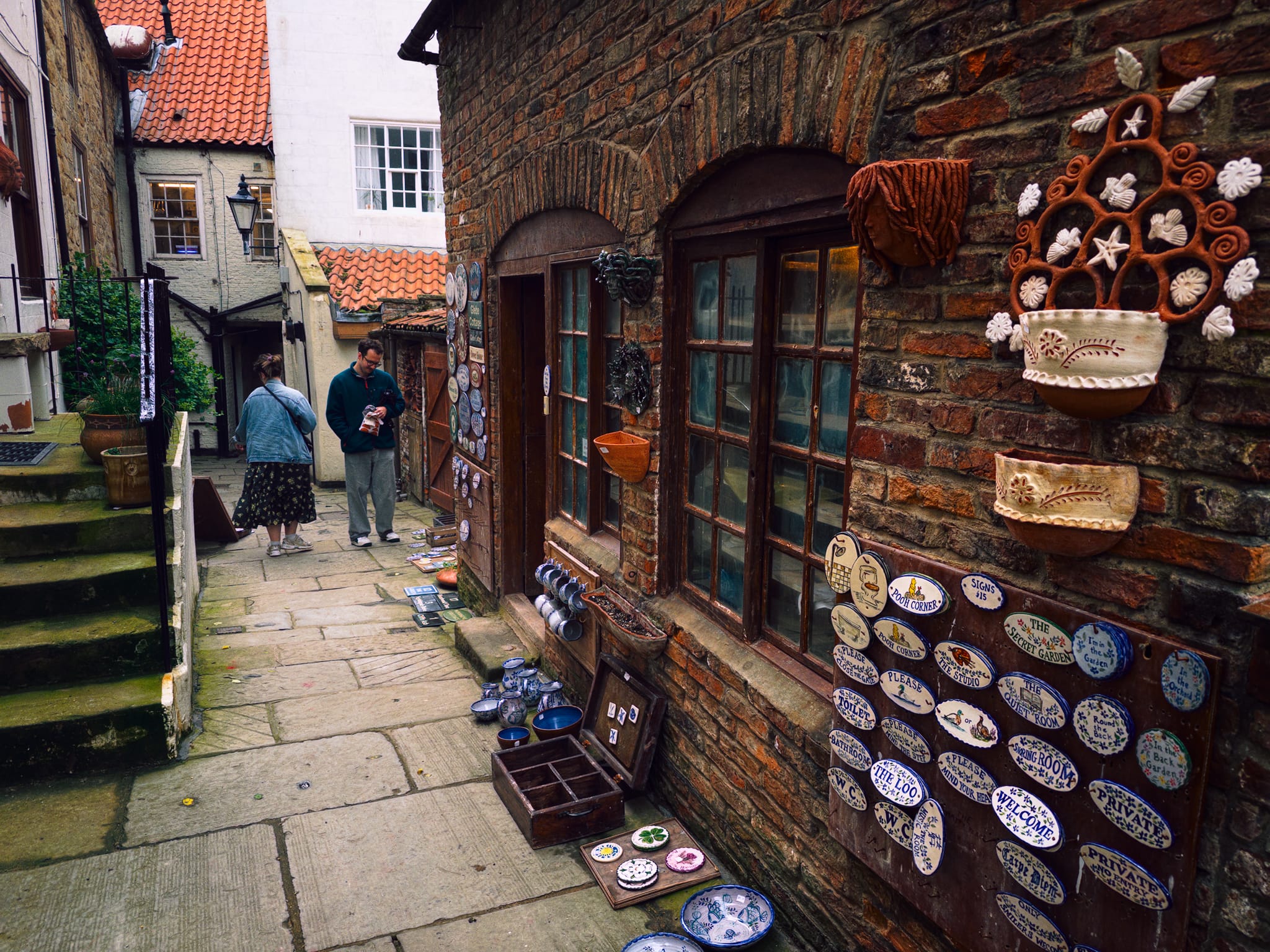
Making our way through the old town, Lisabet wanted to take a small diversion to this pottery found down a little ginnel. This is the Washouse Pottery. Laureen Shaw, an Arizonan who settled in Whitby via her grandmother, opened the pottery in 1982 in a former wash house off Church Street. It’s now the town’s oldest surviving pottery. A ceramics graduate, she pivoted from gallery work to hand-painted tiles after failing to find suitable ones for her own kitchen. Her tiles and commemorative plaques blend Native American and Mexican motifs with British subjects.
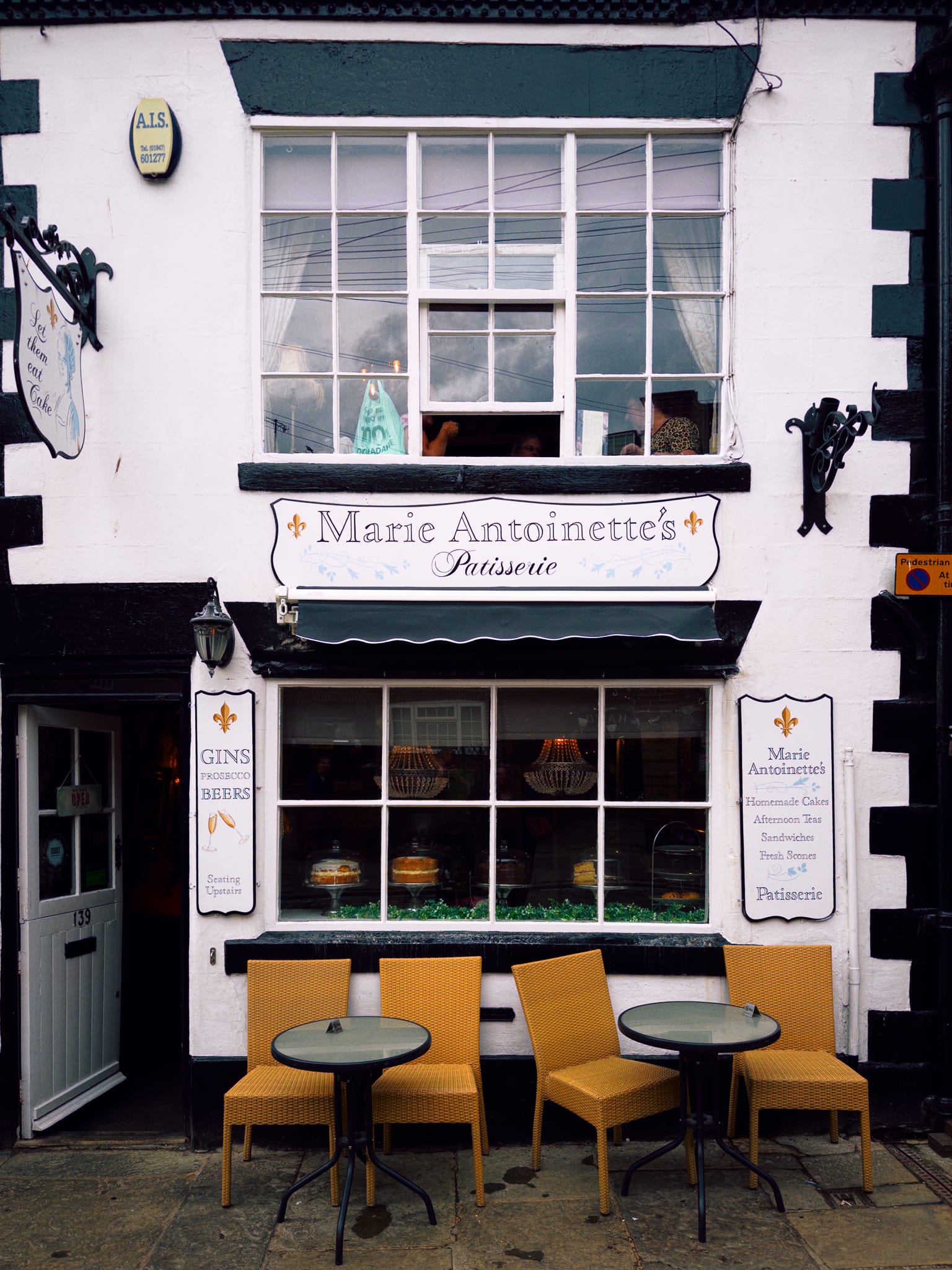
This is Marie Antoinette’s Patisserie, located on Church Street — Whitby’s oldest street — and famous for its quirky, Versailles-inspired regal charm and Victorian/Dickensian styling.
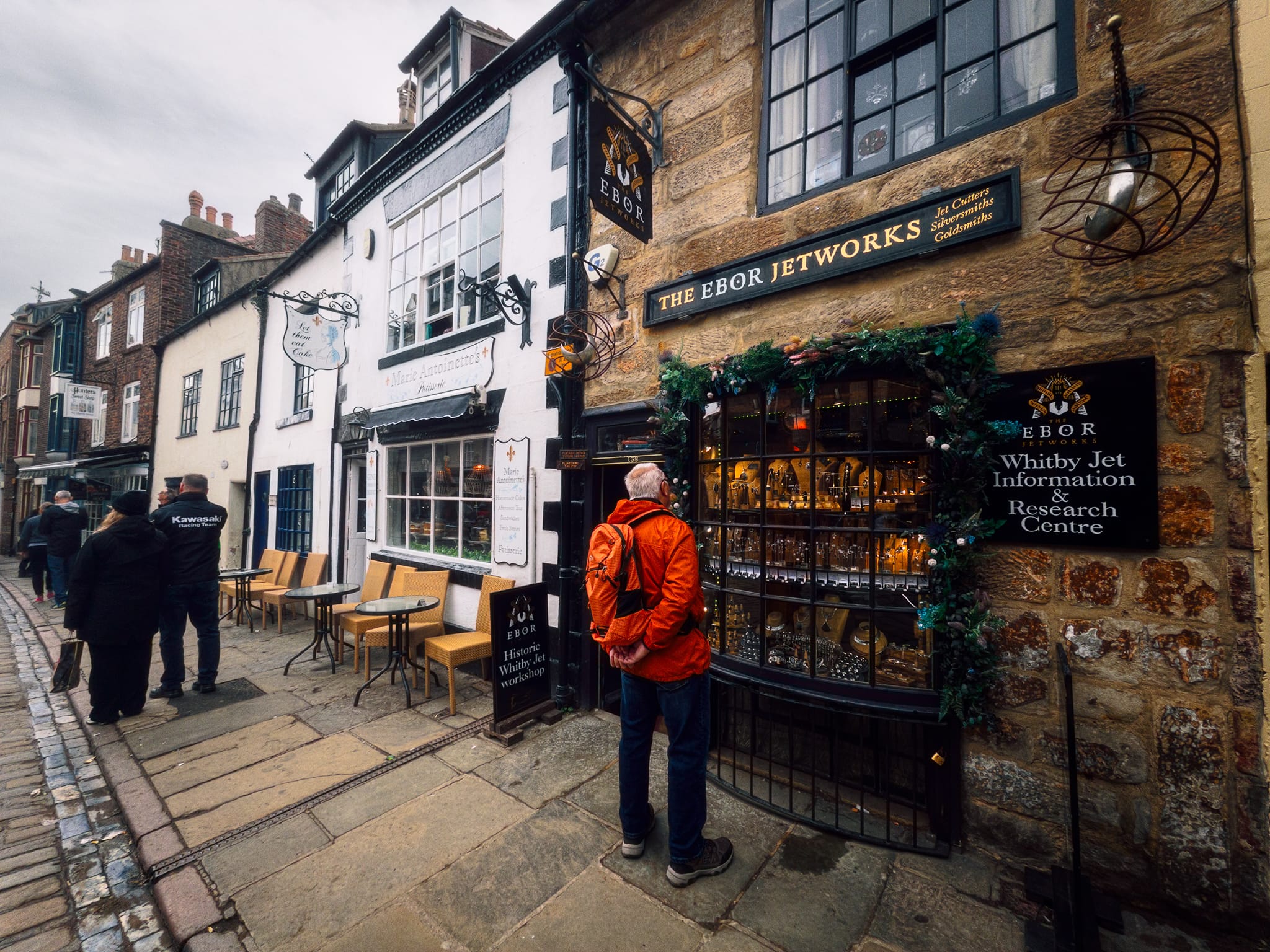
A bit further along is the Ebor Jetworks. It’s housed inside a preserved 17th-century fisherman’s cottage built around 1650. Cellar excavations in the 1980s even uncovered an old medieval harbor wall. The shop specialises in authentic Whitby Jet, a rare, mirror-shining black organic gem material formed from the fossilized wood of Jurassic-era trees over 180 million years old.
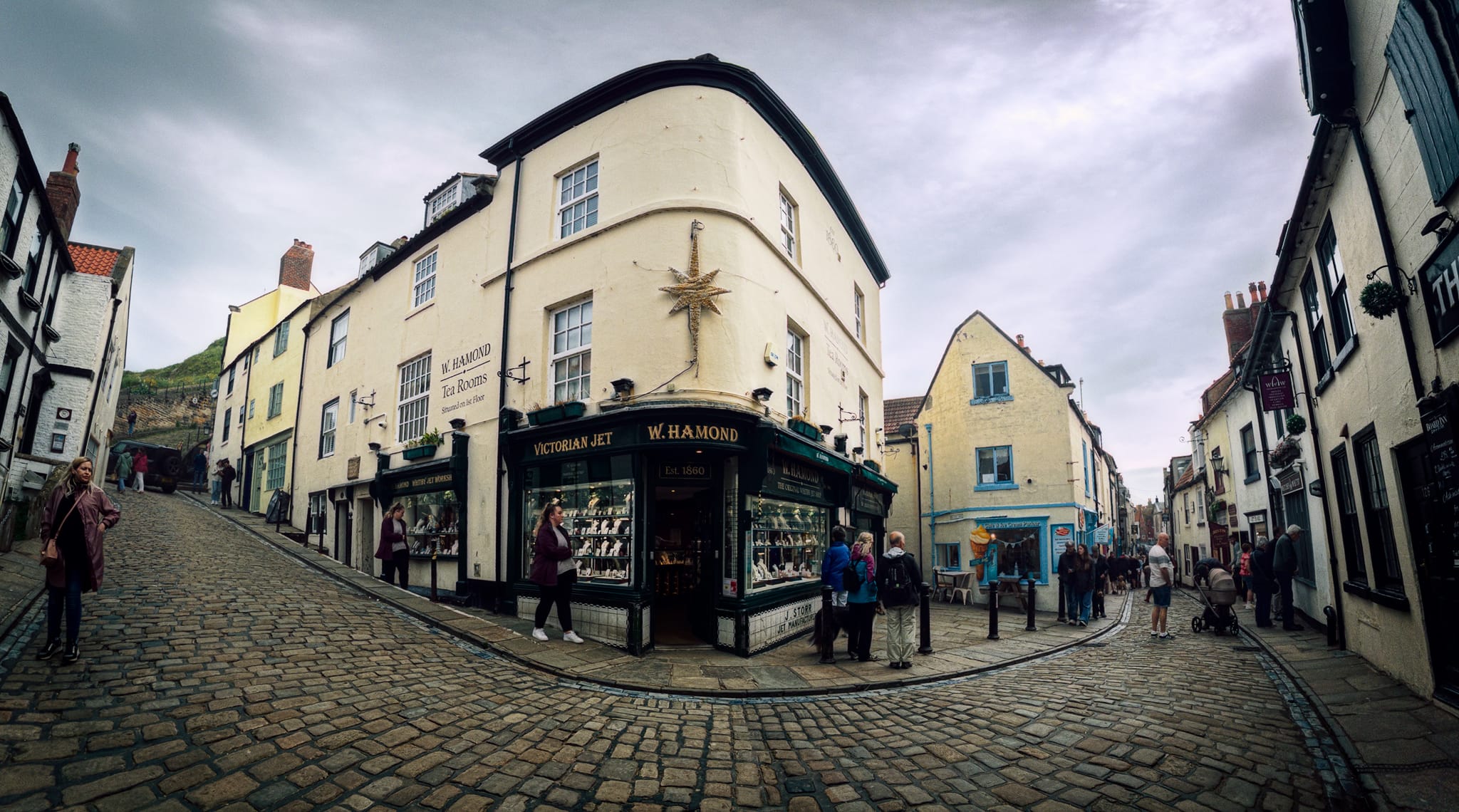
The iconic storefront of W Hamond - The Original Whitby Jet Shop, captured within a panorama. Established by James Storr in 1860, W Hamond is the town’s oldest surviving manufacturer and retailer of genuine Whitby Jet jewelry. Operated continuously from this exact same street corner for over 165 years. Crikey.
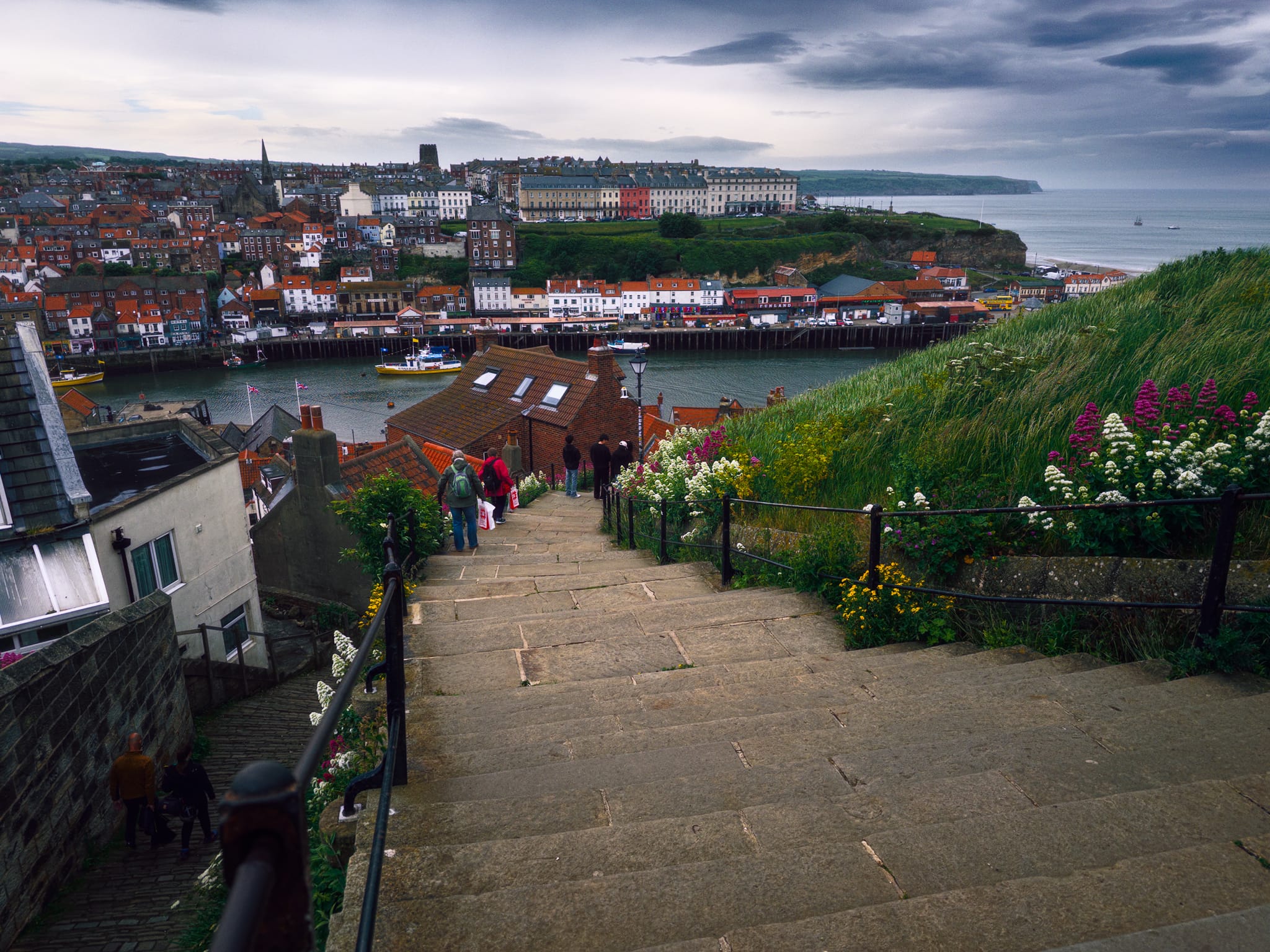
Heading up Whitby’s famous 199 Steps. Originally made of wood and recorded as early as 1340, these steps were used by churchgoers to reach St Mary’s. This exact staircase plays a starring role in Bram Stoker’s 1897 novel Dracula. In the book, the vampire takes the form of a large hound that bounds up these 199 steps after his shipwrecked vessel, the Demeter, runs aground on the beach below.
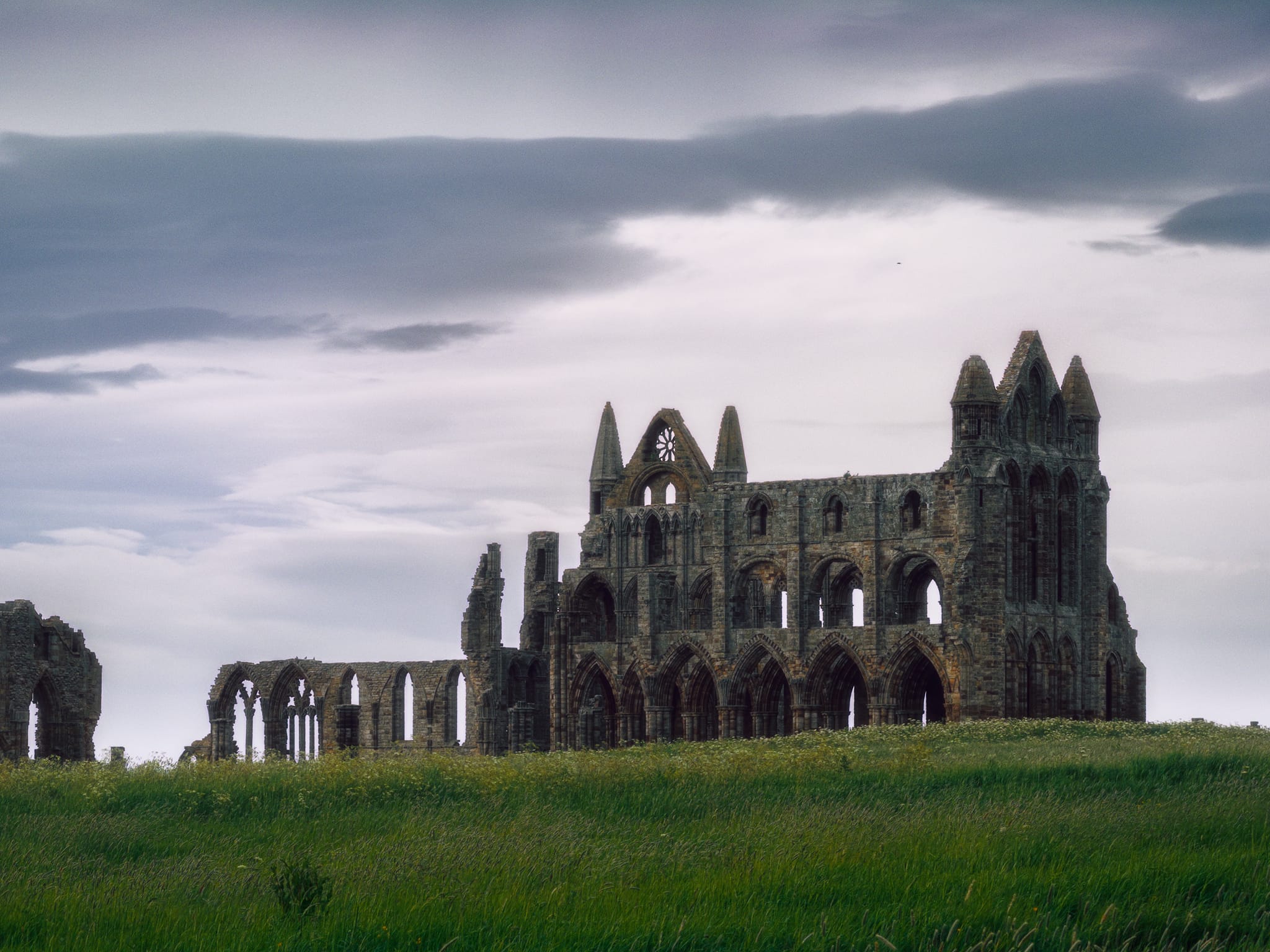
The majestic ruins of Whitby Abbey. A Benedictine abbey, built after the original monastery was burnt down by the Vikings, it was dedicated to Lady Hilda, the original monastery’s founder and first abbess. As with a lot abbeys in England, it was destroyed by Henry VIII in 1540 during the Dissolution of the Monasteries.
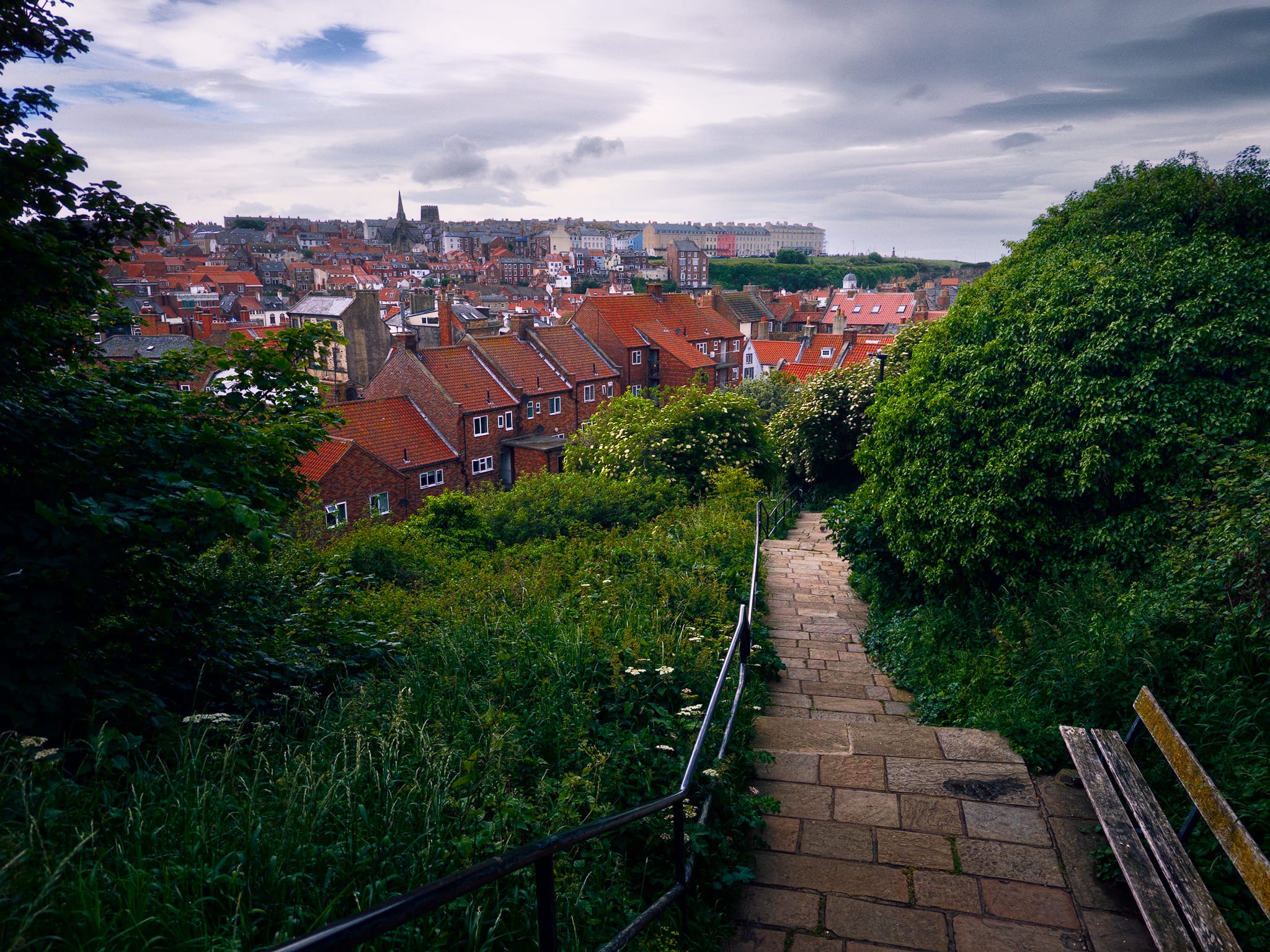
Rather than going back down the 199 Steps, we took an alternative route back down to the sea, which gave us this crackin’ view overlooking the town.
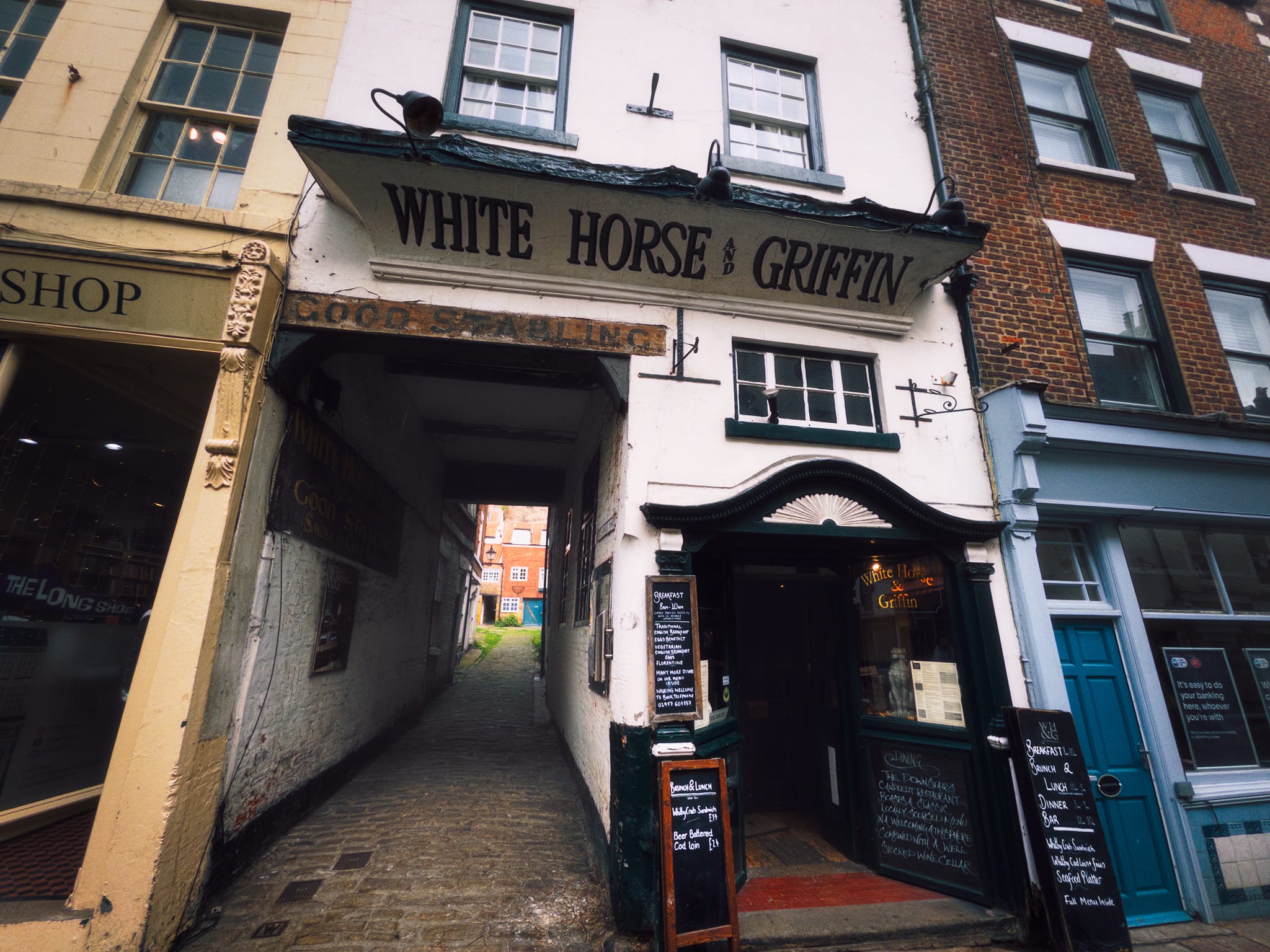
Whitby is full of historical gems (ah-ha!) like this. This is the White Horse & Griffin. Built in 1681 by Sir Hugh Cholmley, this property served as the very first coaching inn running between Whitby, York, and London. Renowned maritime explorers Captain James Cook and William Scoresby used the tavern as a hub to interview, hire, and assemble their ship crews. Charles Dickens visited the establishment and wrote about its unique layout, specifically mentioning the “oyster-shell grottoes” located in the back yard.